


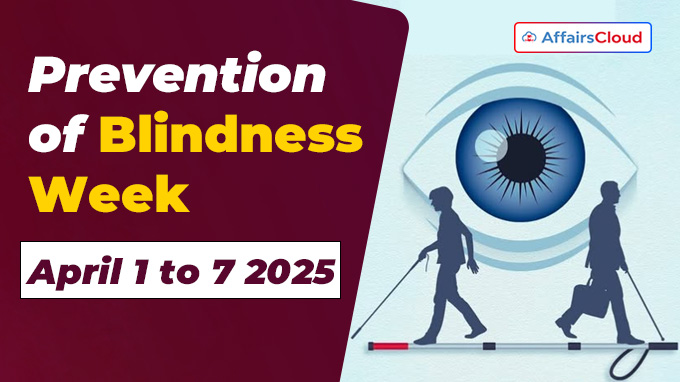
Prevention of Blindness Week: A Call to Action for Eye Health in India
As the sun rises over the bustling streets of Mumbai, a group of health workers gathers at a community center, ready to kick off Prevention of Blindness Week. For a week, this initiative aims not just to raise awareness but to ignite a collective responsibility towards one of India’s silent crises: avoidable blindness. In a country where nearly 62 million people suffer from visual impairment, this week is crucial for educating millions about the need for regular eye check-ups and the preventive measures that can safeguard vision.
The Growing Crisis of Blindness
According to the World Health Organization (WHO), 2.2 billion individuals globally experience vision impairment, and in at least 1 billion cases, this impairment remains unaddressed. This staggering statistic underscores a pressing global health issue. In India, the impact is particularly pronounced, with an estimated annual loss of USD 54.4 billion due to blindness and visual impairment, both in terms of healthcare costs and lost productivity.
Understanding Blindness
Blindness is not merely the absence of sight; it encompasses a spectrum of visual impairment that can profoundly affect day-to-day living. According to Dr. Aditi Malhotra, an ophthalmologist and a leading voice in India’s eye care community, “By recognizing the various causes and degrees of blindness — from infections to genetic disorders — we can tailor our preventive measures more effectively.” With nearly 77% of blindness cases being preventable, the urgency for awareness and education could not be clearer.
The Role of Prevention of Blindness Week
Launched annually by the National Society for the Prevention of Blindness (NSPB), this week serves as a focal point for initiatives that extend beyond mere awareness. Established in 1960, the NSPB collaborates with international bodies like Rotary International and Sightsavers to implement practical solutions aimed at reducing visual impairment.
- Creating public awareness regarding causes of blindness.
- Encouraging regular eye examinations to detect issues early.
- Promoting lifestyle changes that contribute to improved eye health.
Government Initiatives: A Comprehensive Approach
The Indian government has rolled out various programs to combat blindness, such as the National Program for Control of Blindness (NPCB) initiated in 1976. Building upon this foundation, the NPCB & Visual Impairment (NPCBVI) was introduced in 2017, emphasizing a multifaceted approach to eye health.
Dr. Ramesh Chaudhary, an expert in public health, emphasizes the importance of these governmental efforts: “Without comprehensive national programs, millions would continue to suffer in silence. The structured approaches provide not just medical interventions but also empower communities to prioritize eye health.”
International Perspectives and Local Realities
As we examine blindness on a global scale, it’s critical to consider local contexts. The Vision Atlas 2021 indicates that of the 1.1 billion people living with vision loss globally, 90% of cases are preventable or treatable. Yet, discrepancies remain in access to essential services. In India, eye care disparities impacted by socioeconomic factors mean that while urban populations may have access to a plethora of eye care facilities, rural residents often face significant barriers.
Community Wisdom and Local Solutions
During this week of heightened awareness, communities are mobilizing, incorporating local wisdom alongside modern medical practices. In states like Odisha, local NGOs are conducting workshops that blend ancient wisdom with contemporary techniques. “People are being encouraged to turn to traditional herbs known for promoting eye health, while also being educated about necessary clinical interventions,” says Priya Sethi, a community health worker.
The Importance of Regular Eye Check-Ups
Regular eye examinations are vital to catch issues before they escalate. Yet, data shows that less than 30% of adults undergo routine check-ups. “Regular screenings can reduce the risk of preventable blindness significantly. It’s a small commitment that reaps big rewards,” remarks Dr. Malhotra.
Addressing Stigma and Misconceptions
Beyond the medical realm, societal attitudes surrounding blindness also need addressing. There remains a certain stigma attached to visual impairment, which can inhibit those affected from seeking help. Education plays a pivotal role here. “We need to shift the narrative around blindness, presenting it not as a stigma but as a condition that can often be treated effectively,” emphasizes Dr. Chaudhary.
Looking Toward the Future
As Prevention of Blindness Week comes to a close, it paves the way for ongoing discussions and relocations in healthcare frameworks. The fight against blindness is not merely a medical challenge but a collective social responsibility, intertwining education, healthcare policies, and community action.
With projections from WHO indicating that global blindness cases may rise to 60 million by 2050 if current trends continue, the urgency for decisive action is palpable. As Dr. Malhotra asserts, “Our goal should be to create an environment where eye health is prioritized, ensuring that every individual has access to the care they need.”
In this light, the prevention of blindness transcends a single focus week; it highlights a movement of empowerment, urging communities to rise together for one of society’s most crucial yet overlooked health challenges.
Source: affairscloud.com

