


Drivers and Other Road Transport Workers: Opening Up About Emotional Wellbeing
Amid the thrum of diesel engines and the rhythmic crunch of tires against asphalt, a quiet crisis lurks within the road transport industry. Last year, a shocking survey conducted by the National Institute for Transport Health found that 36% of drivers reported experiencing depression but did not seek help. In a profession often characterized by solitude, demanding hours, and high expectations, many workers feel compelled to conceal their emotional struggles. This is beginning to change, thanks to initiatives by companies like McCann Logistics and partnerships with organizations such as Andy’s Man Club.
The Silent Struggle of Drivers
The burden of mental health issues among drivers is not a new phenomenon, but the stigma tied to discussing emotional wellbeing remains a significant obstacle. Limited access to support, combined with a culture that prioritizes toughness, often leads drivers to suffer in silence. “Mental health is still often viewed as a weakness in male-dominated sectors,” states Dr. Emily Carter, a psychologist specializing in occupational health. “This perception must shift to allow open discussions and accessible support for those in need.”
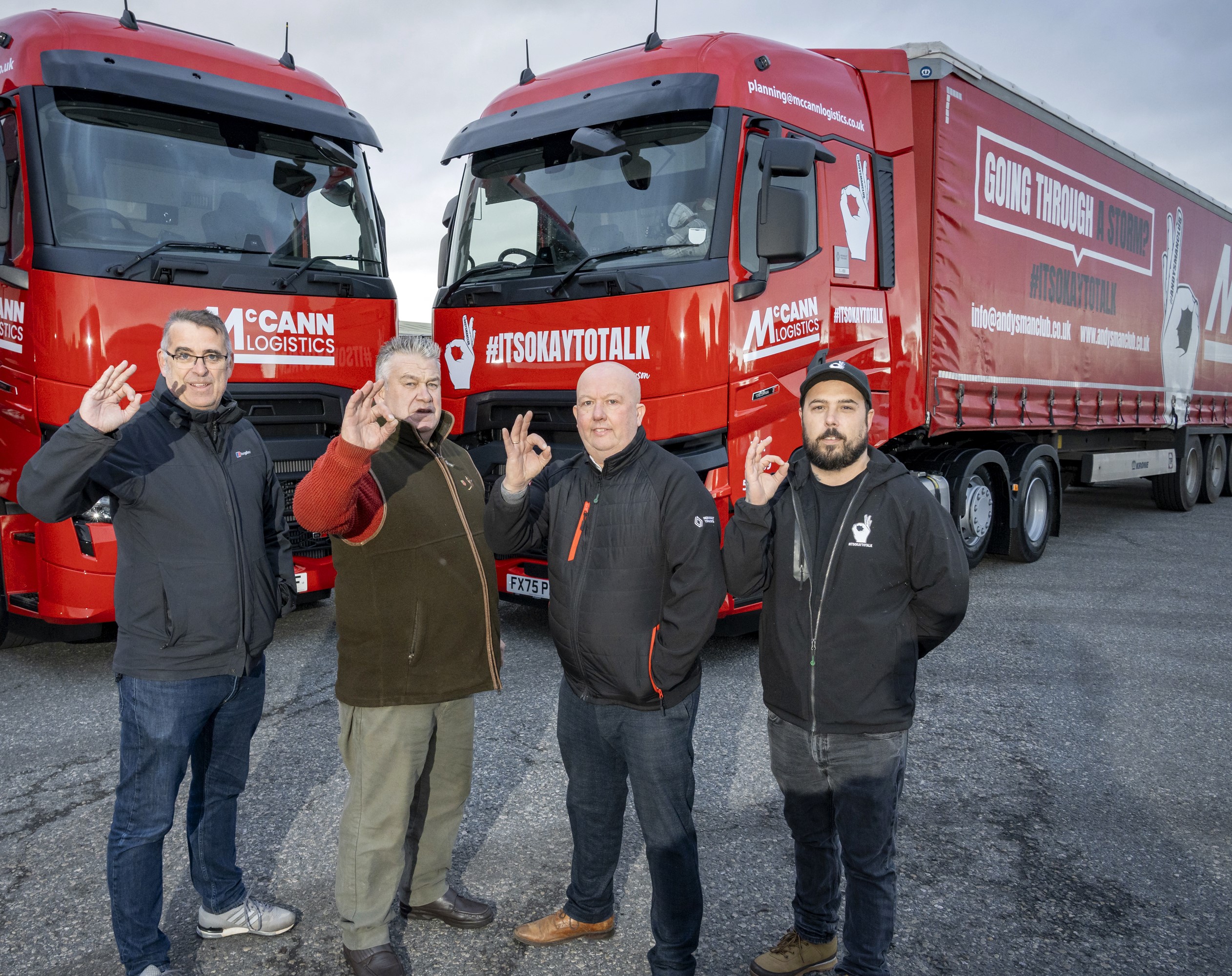
In response to this urgent need for change, McCann Logistics, headquartered in Immingham, initiated a partnership with Andy’s Man Club that aims to destigmatize mental health conversations. This collaboration began at a local Armed Forces Day event and has since blossomed into a concerted effort to raise awareness through visible branding on their fleet of trucks.
Peer Support and Visibility
Two new Renault Trucks T High Compound tractor units, adorned with the Andy’s Man Club message “It’s okay to talk,” serve as moving billboards, conveying a vital message across the UK’s roads. One truck bears a deeply personal tribute to a McCann driver who recently lost his son to suicide. With the family’s permission, his name will be displayed on a vehicle, a poignant reminder of the real stakes in addressing mental health issues.
Mark Brighton, General Manager at McCann Logistics, emphasized the importance of this initiative: “It’s a small gesture, but it means a great deal to our driver and his family. If even one man decides to attend a Monday night support group because they saw one of our vehicles, then it’s worth everything.” Such visible gestures not only foster community solidarity but aim to break down barriers to seeking help.
Comprehensive Support Strategies
Beyond visibility, many logistics companies are making strides in creating robust support systems. XPO Logistics, for example, has trained over 100 mental health first aiders (MHFAiders) across its UK and Ireland operations. This program, which has been integral to their culture for more than six years, empowers employees to seek peer support within their local teams, making mental health resources more accessible. “Every opportunity we can, we’ll advertise upcoming courses,” says Amy Brown, HR Business Partner at XPO, underscoring the proactive approach to mental wellbeing.
- Regular training and support workshops
- Peer-support networks led by MHFAiders
- Anonymous online resources and counseling
- Community events promoting awareness
Companies like Yodel are also stepping up. Their partnership with the Retail Trust has facilitated almost 400 counselling sessions, addressing trauma and anxiety among workers. Ali Richardson, HR Director at Yodel, remarked, “Throughout the partnership, the Retail Trust has provided invaluable support to our team members, with great success and feedback.”
The Need for Holistic Approaches
In addition to direct support systems, comprehensive wellness programs are emerging in the logistics sector. Logistics UK recently introduced the Thrive hub, a dedicated online platform offering a wealth of resources on nutrition, fitness, and mental wellbeing. This initiative aims to equip workers with practical tools for managing their health, while also encouraging companies to be proactive in supporting their employees.
“In an industry where long hours, shift work, and high levels of responsibility can put a real strain on wellbeing, we are confident that Thrive provides genuine help and guidance,” states Kevin Green, Director of Policy, Marketing and Communications at Logistics UK.
However, acknowledging the problem is merely the first step. Operators must foster environments where conversations about mental health are not only accepted but encouraged.
Moving Towards a Healthier Future
As awareness of mental health issues rises, so too does the imperative for change within the road transport industry. The conversations ignited by initiatives like Andy’s Man Club, combined with practical support structures at companies like McCann and XPO, are critical for progress. “We need to normalize these conversations—our industry won’t improve unless we start to amplify those voices that have been silenced for too long,” warns Dr. Carter.
While the journey toward comprehensive mental health support in the road transport sector is ongoing, the steps being taken reveal an encouraging trend. As visibility increases and conversations become more open, there lies hope in transforming the culture surrounding emotional wellbeing—ensuring that no driver needs to carry their burdens alone.
Source: www.smmt.co.uk

