


A New Approach to Balance: Exploring the Benefits of Supine Exercises
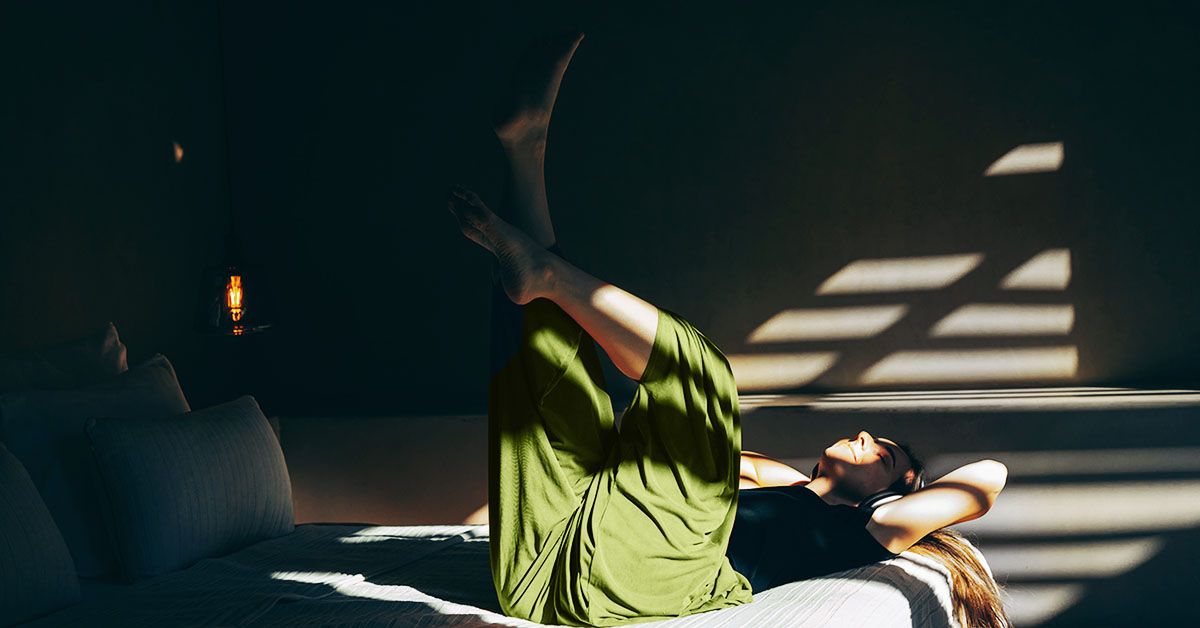
In a sunlit room echoing with laughter, a group of young adults gathers on yoga mats, performing a series of simple exercises. They lie on their backs, legs raised, engaging in playful movements that resemble childhood games. Unbeknownst to them, they are part of a groundbreaking study, poised to redefine how we think about balance and stability in body movement.
The Science of Balance
Balance is often taken for granted, yet it is a complex interplay of physical and neurological mechanisms. As we age or encounter injuries, our ability to balance diminishes, leading to falls and, in severe cases, loss of independence. In light of this, a recent study by researchers at Tokyo University of Agriculture and Technology sheds light on an innovative 10-minute exercise routine designed to enhance balance and agility while performed in a supine position.
“Maintaining good balance is crucial for staying independent and avoiding injury,” explains Dr. Yoriko Atomi, Professor Emeritus at The University of Tokyo. “Our research suggests that a brief daily routine could lead to significant improvements in balance, particularly for those in rehabilitation or older adults.”
Understanding the Mechanisms
The study’s core finding is that these exercises improve neuromuscular coordination rather than simply enhancing muscle strength. The routine includes:
- Abdominal press for core activation
- Small bridges to connect the core and lower back
- Leg slides to promote smooth movements
- “Rock-paper-scissors” played with toes to enhance control
According to Atomi, “The supine position reduces gravitational effects, allowing participants to focus better on synchronizing their core and lower limbs. It’s about quality over quantity; better coordination can mean safer movement.”
The Study’s Design and Findings
Participants in the study, ranging from 17 to 25 years old, underwent a two-week program involving daily 10-minute exercise sessions. Researchers utilized both randomized crossover and pre-post trial designs to assess improvements in flexibility, agility, and balance. The results were illuminating.
“We saw consistent improvements across both experiments,” stated Dr. Kenji Saito, a leading researcher in the study. “Participants exhibited a significant reduction in body sway, especially during challenging standing tasks. Their agility also markedly improved.”
The researchers employed motion sensors to analyze dynamic balance, noting increased control in lateral movements and enhanced trunk flexibility. Interestingly, no significant changes in muscle strength or power were observed, indicating that the benefits stemmed from improved coordination rather than muscle development.
Broader Implications
The implications of these findings extend far beyond the young adults who participated in the study. Atomi argues that the low-load nature of the exercises makes them suitable for broader populations, including:
- Older adults
- Sedentary individuals
- Those in rehabilitation settings
“Since the exercises involve minimal physical risk, we see potential applications in fall prevention programs for older populations,” she added. As we devise strategies to assist a growing elderly demographic, this research opens avenues for practical interventions aimed at enhancing quality of life through improved balance.
Going Forward: Future Research and Applications
Despite the promising results, Atomi cautions against generalizing findings until further research confirms effectiveness across different populations. “We’re now looking at ways to test this routine in older adults and other clinical settings,” she said. “Understanding its efficacy there will be critical for wider adoption.”
The supine exercise program demonstrates a fascinating intersection of simplicity and effectiveness. “It’s about refining how our bodies move together,” Saito asserts. “The fact that this can be done from the comfort of one’s home makes it an appealing option for those eager to improve their physical capabilities without the risk of injury.”
As participants at the study’s conclusion left their mats, they carried with them not only improved balance but also a sense of empowerment that came from taking charge of their physical health. Perhaps the most compelling aspect of this research is not just the physical gains but the renewed belief in one’s ability to navigate the world with confidence.
Source: www.medicalnewstoday.com

