


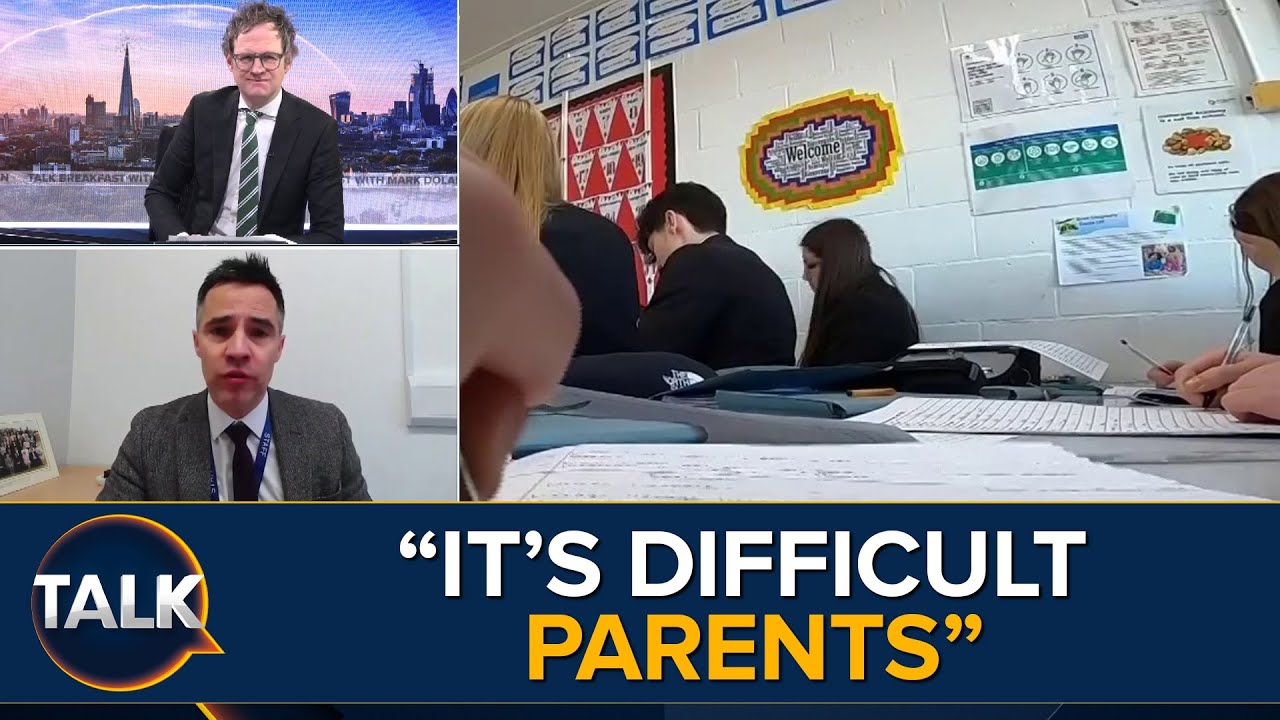
YouTube · TalkTV: “We Had To Call The POLICE!” | Mental Health Crisis Hits UK School Leaders
Amid the hushed corridors of a primary school in South London, a headteacher found herself in an unsettling confrontation. Children were restless, teachers seemed fatigued, and parents were demanding answers. It was just another day at a time when the pressures of leadership had grown so intense that the very fabric of school life felt frayed. “I had to call the police when a parent threatened to physically confront me about a school policy,” she confided during a recent zoom session with colleagues. “This is not just about teaching anymore; it’s about survival.”
The Rising Tide of Mental Health Issues
The mental health crisis is no longer confined to the pandemic; it’s a persistent storm, wreaking havoc on the UK’s educational environment. A recent survey by the National Association of Head Teachers (NAHT) revealed troubling statistics: nearly half of school leaders felt the need for mental health support last year, with 72% indicating that their roles adversely affected their wellbeing.
The Numbers Behind the Strain
The NAHT survey painted a stark picture:
- 47% of school leaders reported feeling overwhelmed.
- 72% stated their job worsened their mental health.
- 68% experienced significant stress due to constant accountability measures.
- 55% felt isolated, without adequate support.
Dr. Angela Bose, a psychologist specializing in educational environments, explained, “The statistics are alarming but not surprising. England’s educational framework, with its stringent assessments and funding cuts, mounts incredible pressure on school leaders. They become the frontline soldiers in what has sadly become a war on education.”
Systemic Pressures Amplifying the Crisis
School leaders often find themselves at the mercy of external forces: government policies, accountability measures, and community expectations. Children’s mental health, exacerbated by the COVID-19 pandemic, feeds back into schools, generating an overwhelming cycle of stress for teachers. Amanda Lee, a headteacher in Birmingham, lamented, “It feels like we’re under siege. The expectations are high, funding is low, and everyone is relying on us to fix problems that are much bigger than any one school.”
The Role of Digital Platforms
With the advent of platforms like YouTube and TalkTV, the educational discourse has shifted significantly. Content that once celebrated teaching now often presents it through a critical lens, adding yet another layer of scrutiny. “Videos critiquing educational practices go viral, making school leaders feel like they are constantly under fire,” remarked Professor Richard Hargreaves, a leading educational policy expert. “The constant visibility can be debilitating.”
Figures from recent studies indicate that over 60% of school leaders have reported anxiety about their professional reputation being tarnished by social media narratives. “The line between personal and professional is blurred, particularly in an era where social media holds unparalleled influence,” added Hargreaves.
Building a Support Network
In response to the growing crisis, some leaders have begun to create informal support networks. Peer groups, where frustrations can be shared and strategies discussed, are emerging as lifelines. “It’s a place where we can vent, share experiences, and most importantly, find understanding,” shared James Thompson, a school principal in Manchester. “Without these networks, I don’t know how I’d cope.”
Implementing Changes for Recovery
To combat this pressing issue, experts recommend actionable changes:
- Establishing mandatory mental health training for school leaders.
- Creating peer support groups and therapy options within schools.
- Advocating for more considerable governmental support and funding for mental health initiatives.
- Encouraging a culture of openness about mental wellness among staff.
Dr. Bose argues, “If we want our educational leaders to thrive, we must prioritize their mental health. The system as it stands requires transformation to foster resilience, not just survive the scandals.”
A Call for Societal Change
The echoes of distress across schools in Britain reflect a societal issue that extends beyond the classroom. The mental health crisis among school leaders is a symptom of systemic failures, including insufficient funding and a demanding climate. The narratives perpetuated online only amplify these challenges. However, calls for societal change are rising, both for educational reform and the importance of prioritizing mental health.
The urgency of the situation has prompted researchers to advocate for a holistic approach to education—one that recognizes and addresses the wellbeing of educators as paramount. “The next few years will be critical,” stated Dr. Hargreaves. “If we neglect mental health, we risk losing a generation of dedicated professionals who might otherwise shape the future of our children.”
As the headteacher in South London reflected on her harrowing experience, she understood that change must come not just from within schools but from a broader cultural shift. “Sometimes we forget that those at the helm of our educational institutions are human. They require care, attention, and above all, support—investing in their mental health is investing in our future.”
Source: www.youtube.com

