


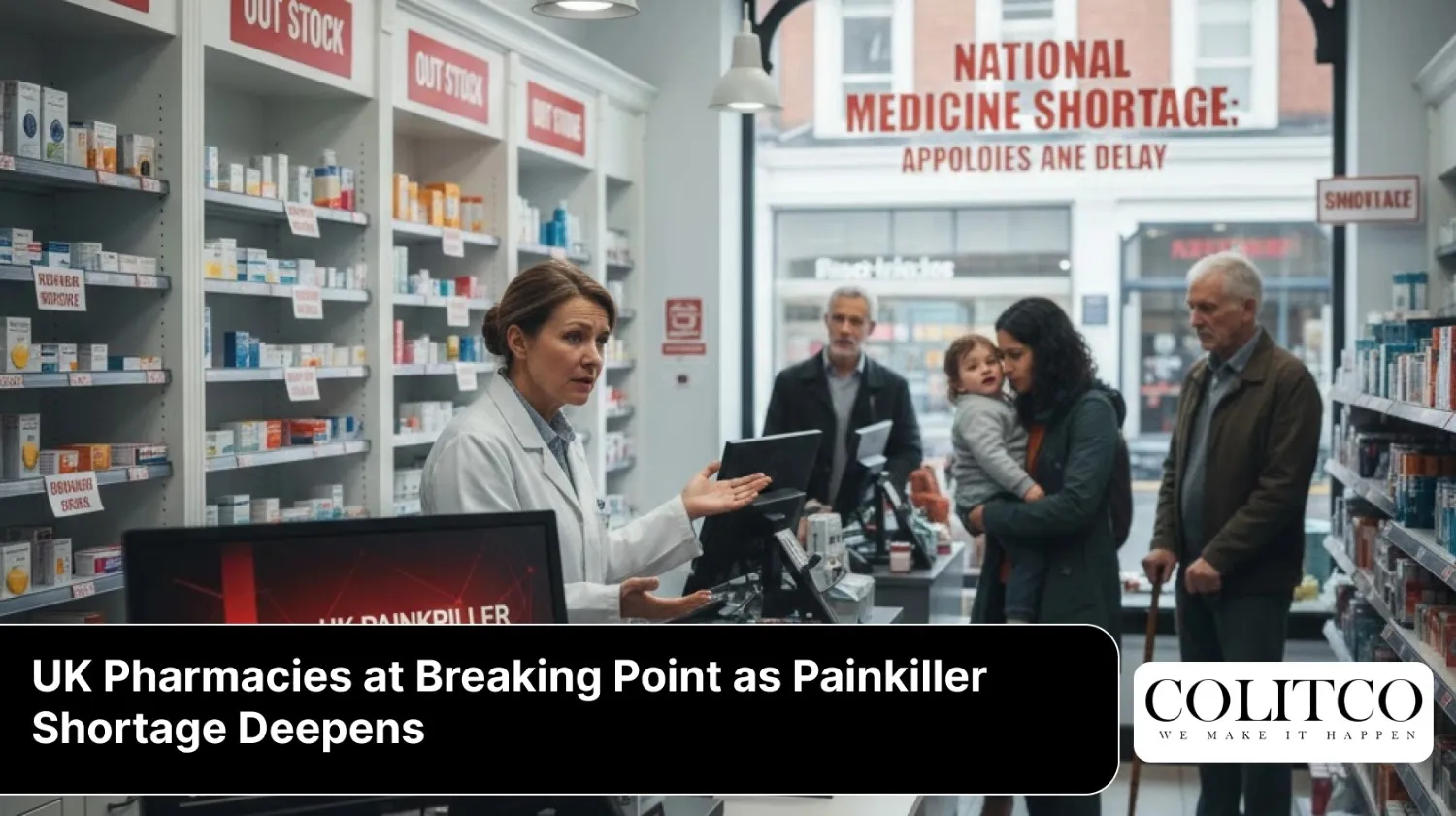
Britain’s pharmacies are sounding the alarm over a deepening crisis that’s leaving shelves empty and patients scrambling for basic pain relief medications.
As dawn breaks over the streets of Manchester, the familiar sight of pharmacy doors slowly opening is overshadowed by an unsettling reality: a packed queue of patients waiting not just for their prescriptions, but for the hope of finding something—anything—to alleviate their pain. With shelves glaringly empty, many face the grim task of visiting multiple locations, a growing trend that has come to be known as “pharmacy bingo.”
Daily Battle for Basic Medicines
The 2025 Pharmacy Pressures Survey unveils alarming figures: 87% of pharmacy staff report daily medicine supply issues, a staggering leap from 67% in 2022. This sharp decline paints a grim picture of the UK’s healthcare supply chain, which is simultaneously burdened by rising demand for essential medications and a deepening supply crisis.
Among the hardest hit are pain relief medications, with around half of all pharmacies reporting depleted stocks of painkiller creams. More than 20% struggle to maintain supplies of diabetes medications. “Every day feels like a battle,” remarks Dr. Helen Parker, a community pharmacist in Birmingham. “Patients come in, and often, we have to tell them we have nothing.”
Co-Codamol Latest to Join Shortage List
On January 16, 2026, a Medicine Supply Notification from the Department of Health and Social Care confirmed that co-codamol, a critical pain management drug combining paracetamol and codeine, had officially joined the growing list of medications in short supply.
Other painkillers currently facing disruptions include:
- Pain relief creams and topical treatments
- Paracetamol suppositories (expected restocking February 2026)
- Codeine-based products
- Various formulations of common analgesics
NHS Pays Heavy Price
The NHS is bearing a severe financial burden, with estimated costs reaching £220 million in 2022-2023 due to the necessity of sourcing substitutes at premium prices. “This is money that the NHS simply cannot afford,” discusses Dr. Samuel forensic, a healthcare economist at Oxford University. “Every time a medication is out of stock, not only do patients suffer, but the NHS is forced to pay inflated prices.”
A staggering 96% of surveyed pharmacists report spending more time managing these supply issues, with 40% dedicating one to two hours each day to sourcing alternative medications. “Customer satisfaction is slipping,” bemoans Sarah Reynolds, a pharmacy owner in London. “Almost two-thirds of us are having to contact prescribers multiple times daily just to resolve shortages.”
Patients Playing “Pharmacy Bingo”
The human cost spirals beyond monetary figures. An overwhelming 86% of pharmacy owners indicate that patients are forced to visit multiple pharmacies in search of prescribed medications, creating a frustrating experience dubbed “pharmacy bingo.” “It’s exhausting,” states Rachel, a patient who suffers from chronic migraines. “I’ve visited three different pharmacies only to find they’re all out of stock.”
This stress often spills over into confrontations, as 79% of pharmacy staff report incidents of aggression from frustrated patients. “They’re just desperate for relief,” explains Dan Thompson, a pharmacy technician in Liverpool. “When we can’t meet their needs, emotions run high and it can turn hostile.”
Chronic Structural Challenge
The All Party Parliamentary Group on Pharmacy’s July 2025 report raises the alarm: medicine shortages have transitioned from isolated incidents to a chronic, structural crisis. The inquiry highlights disruptions across numerous conditions:
- ADHD medications
- Epilepsy drugs
- Menopause treatments (HRT)
- Diabetes medications
- Bacterial infection antibiotics
In some scenarios, these shortages lead to treatment delays, potential drug rationing, and adverse health outcomes that disproportionately impact those with chronic conditions. “It’s a ticking time bomb,” warns Dr. Raj Patel, a senior consultant at the Royal College of Physicians. “Without consistent access to their medications, patients could face dire health outcomes.”
Root Causes of the Crisis
Several intertwined factors contribute to the current medicine shortages. The UK’s healthcare supply chain is lengthy, complicated, and susceptible to disruption. Key issues include:
- Manufacturing problems due to limited raw materials
- Brexit-related import complications
- Supply chain damages from the COVID-19 pandemic
- Economic impacts stemming from the Ukraine conflict
- Rising manufacturing costs and currency fluctuations
The UK relies on imports for 80-90% of its medicines, creating an inherent vulnerability. “This reliance is a double-edged sword,” remarks Dr. Alison Green, a health policy analyst. “When global events disrupt production or distribution, we pay the price.”
Government Response Accelerates
The UK government is accelerating its response, exemplified by the August 2025 publication titled “Managing a Robust and Resilient Supply of Medicines.” This strategy outlines key measures aimed at reinforcing drug supply chains.
Proposed remedies include:
- Enhanced communication processes regarding supply issues
- Greater flexibility for pharmacists in offering medication alternatives
- Actions to ensure supply reliability
Although the government recognizes its limitations in preventing all shortages, officials remain focused on reducing frequency and minimizing patient impacts. The Serious Shortage Protocols (SSPs) aim to empower pharmacists to provide specific alternatives without requiring patients to revisit their GP for new prescriptions.
Calls for Pharmacist Authority
Industry leaders are clamoring for greater authority for pharmacists in substituting medications during shortages. Currently, many prescriptions still necessitate GP approval for alterations, even when suitable alternatives exist at the pharmacy. Olivier Picard, chair of the National Pharmacy Association, describes the current situation as “madness,” urging, “Patients shouldn’t have to jump through hoops just to get their essential medications.”
The All Party Parliamentary Group report has made it clear: reforms are urgently needed to empower pharmacists to act in the best interest of patients. Henry Gregg, CEO of the National Pharmacy Association, underscores this sentiment: “When the right solution is already on the shelf, it’s frustrating to know we can’t meet our patients’ needs.”
What This Means for Patients
The ongoing painkiller shortage in the UK represents just one aspect of a far-reaching medicine supply issue affecting the entirety of the nation. As patients navigate this complex landscape, they should consider the following:
- Contact their pharmacy at the earliest possibility when prescriptions are due
- Inquire about alternative formulations if the first choice is unavailable
- Check with multiple pharmacies as needed
- Engage in discussions with pharmacists about potential substitutions
- Report significant access concerns to their GP
The crisis facing UK pharmacies shows few signs of resolution. Structural changes to medicine supply chains, pricing frameworks, and regulations require time to enact. As patients continue to advocate for their needs, the dialogue surrounding pharmacy support remains critical in this unfolding crisis.
Source: colitco.com

