


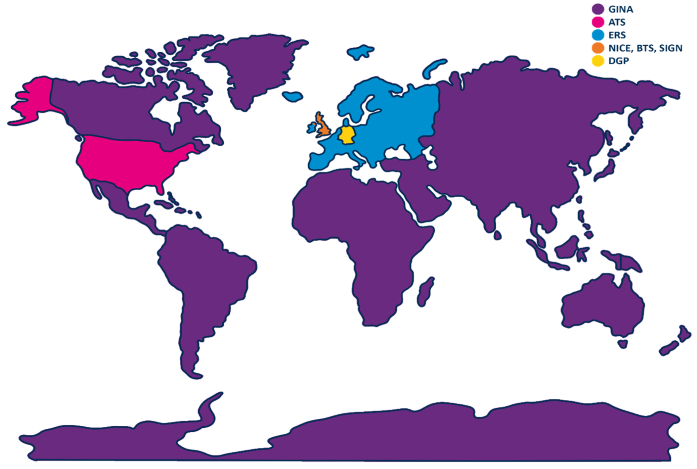
Exploring the Global Landscape of Fractional Exhaled Nitric Oxide (FeNO) Guidelines
In bustling clinics across the globe, a small yet powerful test is reshaping asthma management: the measurement of fractional exhaled nitric oxide, or FeNO. Picture a mother anxiously watching her asthmatic child struggle for breath. With FeNO devices in hand, healthcare providers have the capability to exactly gauge airway inflammation, leading to timely interventions and potentially life-saving adjustments in treatment.
A Harmonized Approach to Asthma Management
NICE, BTS, and SIGN Guidelines
The National Institute for Health and Care Excellence (NICE), in collaboration with the British Thoracic Society (BTS) and the Scottish Intercollegiate Guidelines Network (SIGN), published groundbreaking updates in November 2024 that integrated FeNO testing into standardized clinical protocols. According to Dr. Evelyn Hughes, a noted respiratory physician at the Royal Brompton Hospital, “This joint effort marks a crucial point in unifying the approach to asthma diagnosis across the UK, promoting objective measures like FeNO that can transform the way we treat patients.”
ERS Guidelines
Across the channel, the European Respiratory Society (ERS) took a notable step forward in 2022 by emphasizing the value of FeNO in identification and diagnosis of asthma for patients over 18. Their guidelines suggest that FeNO measurements should complement existing spirometry and bronchodilator reversibility tests. “FeNO provides essential insights into eosinophilic inflammation that other tests may overlook,” commented Dr. Marc Leclerc, a pulmonologist in Paris.
DGP Guidelines
In Germany, the Deutsche Gesellschaft für Pneumologie und Beatmungsmedizin (DGP) published updated guidelines in 2023, elevating FeNO to a cornerstone of asthma diagnostic protocols. They drew upon extensive research indicating that low FeNO levels suggest minimal eosinophilic inflammation, thereby guiding effective treatment decisions.
ATS Guidelines
The American Thoracic Society (ATS) laid the groundwork in 2011 by developing best practices for the interpretation of FeNO tests. Their 2021 update reiterated the importance of integrating FeNO testing into holistic asthma management strategies. Expert consensus hailed this approach as essential for providing tailored therapies based on individual patient needs.
GINA Guidelines
The Global Initiative for Asthma (GINA) has garnered attention for its focus on public health and asthma management. Their 2024 rightfully spotlighted FeNO as a significant biomarker for diagnosing and managing asthma. Notably, GINA’s emphasis on FeNO for guiding treatment decisions aligns with a growing body of evidence from international studies.
Reimbursement for FeNO
- In England, the Quality and Outcomes Framework (QoF) rewards practices for using FeNO testing, enhancing its uptake.
- In Germany, FeNO is acknowledged in asthma guidelines but faces reimbursement hurdles in primary care.
- Medicare in North America includes reimbursement for FeNO, underlining its medical necessity.
The Impact of Guidelines
The formulation and dissemination of asthma management guidelines utilizing FeNO are vital for fostering evidence-based practices internationally. They advocate for standardized treatments that mitigate the risk of misdiagnosis, effectively control healthcare expenditures, and ultimately enhance patient outcomes. A survey by the World Health Organization in 2023 discovered that countries with established FeNO guidelines reported a 25% reduction in asthma-related emergency visits compared to those without.
As healthcare systems across Japan, Italy, and Australia—among many others—adopt their distinct guidelines, the ripple effects of FeNO usage create a cohesive strategy in combating asthma worldwide. These guidelines are not merely bureaucratic red tape; they serve as playbooks for thousands of healthcare professionals, ensuring the precision of diagnoses and treatment strategies.
In closing, as the healthcare landscape continues to evolve, the commitment to integrating innovative tools like FeNO testing not only elevates standards of care but also empowers patients with the knowledge they need to manage their condition effectively. In the narrative of asthma management, the simple act of measuring nitric oxide levels holds profound implications for millions, changing lives one breath at a time.
Source: www.news-medical.net

