


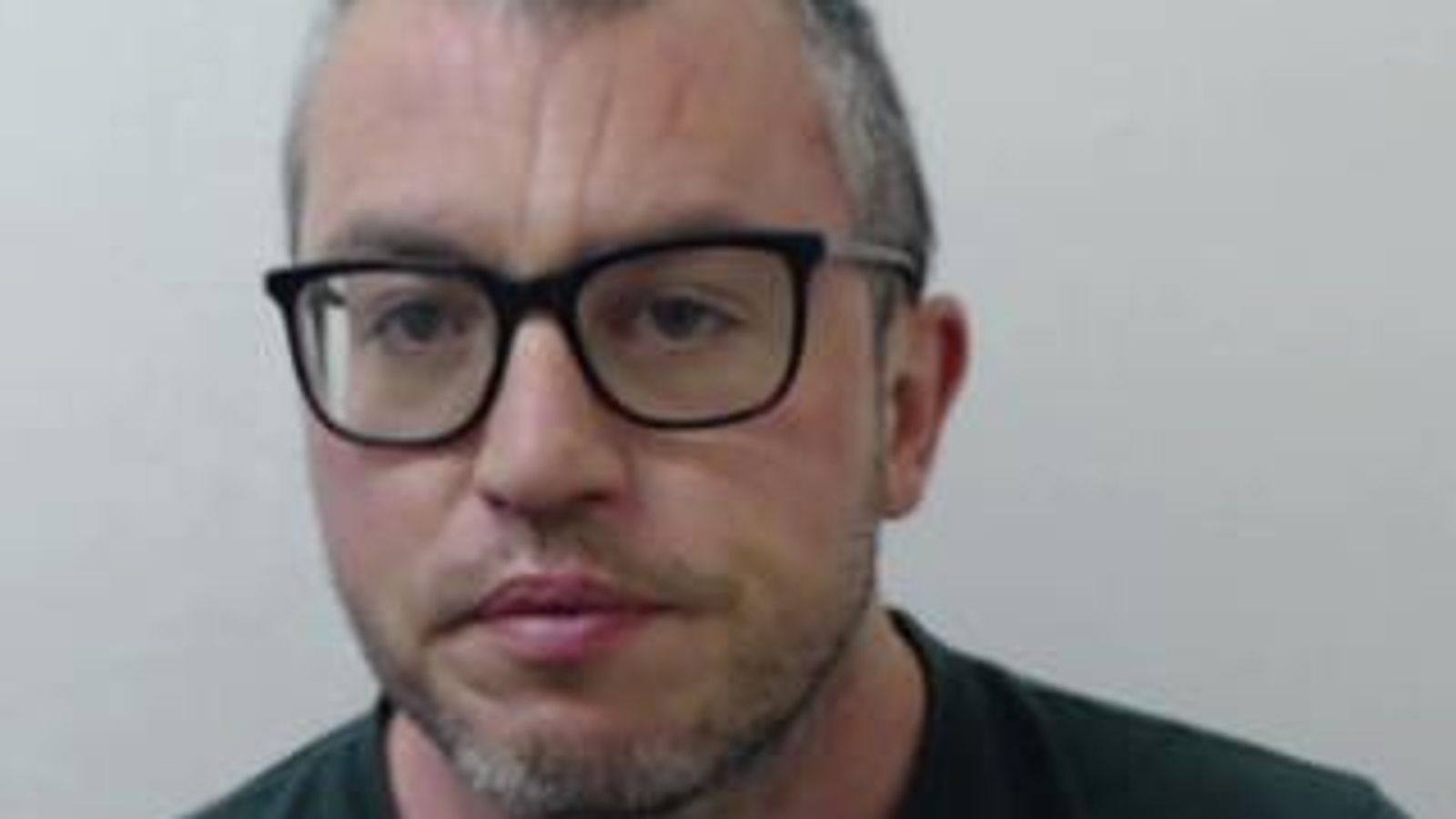
A Man Who Identified as “Evil Jesus” Plotted to Kill a Prosecutor
In the dimly-lit corridors of a courtroom in Glasgow, the chilling revelation emerged: Martin Ready, a self-proclaimed “evil Jesus,” had meticulously plotted to assassinate prosecutor Darren Harty—a scheme rooted in bizarre conspiracy theories about corrupt activities in a local pub. The complexities of a troubled mind collided with legal proceedings, exposing deep-seated issues of mental health, ideology, and criminal intent.
The Dark Web Conspiracy
Between May 2021 and September 2022, Ready’s descent into delusion saw him leverage the dark web to fund his assassination plot. Armed with a belief that he was chosen to expose organized crime, he set up cryptocurrency accounts, transferring an alarming £5,071.24 in Bitcoin to secure a hitman—an act that would lead him to his trial at the High Court in Glasgow.
“This case demonstrates the intersection of mental illness and criminal behavior,” states Dr. Elaine Morrison, a clinical psychologist who studies the correlation between delusional disorders and violent crime. “When conspiracy theories intertwine with personal grievances, the results can be catastrophic.”
During the courtroom proceedings, the prosecution established that Ready claimed his conspiracy emerged from alleged corruption tied to the pub, owned by Harty’s family in Coatbridge. The plan, however, fell apart when a documentary filmmaker inadvertently exposed the plot, revealing that the website Ready used was primarily a façade for a scam.
Delusions and Defenses
Ready’s defense hinged on his mental state. He contended that a “relapse” in January 2022 propelled him into the frame of mind that birthed the plot. He described his condition during testimony, saying, “At the time, I genuinely believed I was Jesus, and that the actions I took were to expose the criminality I had been subjected to.” The courtroom was rocked by the implication that a misunderstanding of reality could drive a man to contemplate murder.
- Delusional disorder diagnosis by experts
- Set up cryptocurrency accounts for payment
- Engagement with dark web hit-man services
- Claims of exposing “money washing”
This disturbing narrative prompted evaluators to diagnose Ready with a “delusional disorder.” He has since undergone treatment at the Rowanbank Clinic, where he remained a patient as experts worked to stabilize his mental state. Yet, he maintained a disconcerting conviction that he was not mentally ill. Dr. Sivakumar Appan, his consultant psychiatrist, summarized this troubling disconnect: “He does not believe he requires medication, which raises significant concerns about his future risk to himself and the public.”
The Prosecution Unfolds
As Harty took the stand, he vehemently denied any allegations of wrongdoing related to his family’s establishment, stating money laundering was “absolutely not” happening there. He recalled Ready’s time at the pub, illuminating their past interactions—Ready, a teetotaler ordering coffee, inadvertently became a figure of irritation among staff during busy nights. “He made an impression, but not in a good way. His odd behavior was hard to forget,” Harty recounted.
This tragic interplay of perceptions and beliefs embroiled the trial in complexity. A curious phenomenon in forensic psychology, individuals often harbor their justifications for unethical behaviors under a veil of conviction, resulting in a failure to recognize reality. “When mental illness manifests in violent intent, as seen in this case, society faces a pressing challenge,” explains Dr. Alex Carter, a forensic psychiatrist with over two decades of experience.
The Legal Outcome
On the final day of proceedings, Judge Lady Hood deemed the plot a “very serious offence.” Following extensive deliberation, she imposed indefinite compulsion and restriction orders to ensure Ready continues to receive psychiatric care. She explicitly noted the planning that went into his scheme: “It involved a considerable degree of planning on your part,” she stated, defining the seriousness of his actions.
As the courtroom proceedings concluded, Ready was transferred back to the Rowanbank Clinic in Glasgow for ongoing treatment—where he will remain in a secure facility, far removed from the public he once threatened. The intertwining narratives of insanity and malevolence now reside within the walls of a mental health institution.
The Broader Implications
The case of Martin Ready exemplifies the complexities surrounding mental health in the legal system. It raises critical questions: How should society respond to individuals whose psychosis leads them to commit acts of violence? Where do we draw the line between criminal responsibility and delusional beliefs?
The tragic reality is that mental health issues can obscure one’s judgment, leading individuals like Ready to navigate a labyrinth of conspiracy and violence while firmly believing in their righteousness. Police and mental health professionals are continually challenged to strike a balance between public safety and the rights of those suffering from mental illnesses. Ensuring that patients receive proper care before reaching a crisis point, as was the case with Ready, remains an essential yet daunting task.
As society grapples with the aftermath of such harrowing cases, the lessons learned must focus on improving mental health support systems and understanding the profound impacts of delusions. Greater awareness can perhaps prevent future tragedies born from the shadows of a troubled mind.
Source: news.sky.com

