


Scientists are testing noninvasive ways to help diagnose Alzheimer’s early
At a quaint café nestled in the heart of London, a woman in her late sixties sips coffee, occasionally staring blankly into her cup. Her family sits nearby, whispering concerns about her forgetfulness—an early sign of Alzheimer’s disease. As she struggles to remember recent events, researchers around the world are racing to identify early diagnostic tools that could change the course of this devastating illness.
The Importance of Early Diagnosis
“Alzheimer’s disease is diagnosed up to 20 years too late,” says George Stothart, PhD, a cognitive neuroscientist and senior lecturer at the University of Bath. He leads the charge on a promising new study that could help identify early signs of Alzheimer’s disease using a noninvasive test called Fastball EEG.
The ability to diagnose Alzheimer’s disease early is crucial for several reasons:
- Implementing Lifestyle Changes: Early diagnosis allows patients to adopt lifestyle changes that might slow disease progression.
- Accessing Medications: Patients can access new drugs that may be more effective if administered early.
- Improving Clinical Trials: Earlier identification facilitates better participant stratification in clinical trials, enhancing drug development.
According to Stothart, individuals with mild cognitive impairment (MCI) who experience memory problems are more likely to develop Alzheimer’s. In this study, Fastball EEG helped researchers determine memory issues in these individuals more effectively.
The Fastball EEG Test
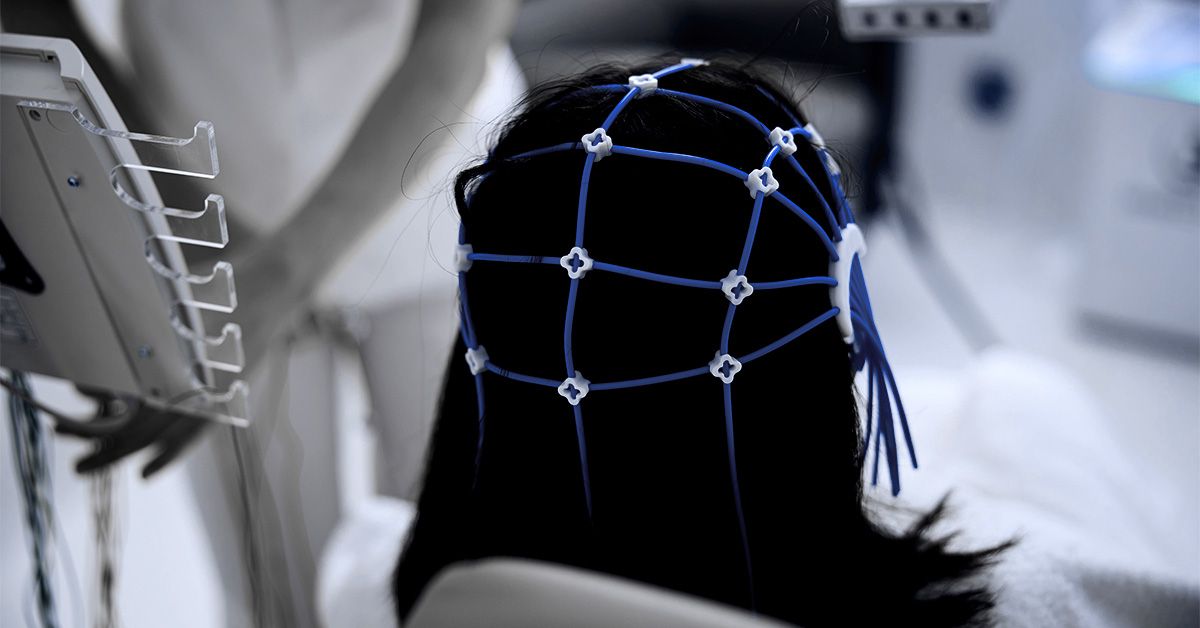
The Fastball EEG test, lasting just three minutes, records electrical activity in the brain as subjects look at a screen flashing images. “Fastball is a passive test of how your brain recognizes objects,” explains Stothart. “Participants simply watch, and we measure brainwaves with an EEG cap. This passive approach mitigates many biases found in traditional memory tests, such as anxiety and cultural differences.”
A total of 107 older adults participated in this study—53 diagnosed with MCI and 54 healthy individuals serving as a control group. The results were promising: Fastball EEG effectively identified memory issues among the MCI group.
Testing at Home: A Game Changer
What’s more, researchers found that Fastball could be conducted outside clinical settings, including patients’ homes. Stothart notes, “Traveling to a hospital can be stressful. Testing in the comfort of one’s home allows for a relaxed environment, reducing anxiety that can skew results. We want to assess genuine cognitive function, not merely the ability to perform under stress.”
Studies show that anxiety can significantly impair cognitive performance, particularly in older adults. By alleviating this stressor, Fastball makes it feasible to gauge memory and recognition accurately.
A Future with Fastball
Stothart is currently involved in two extensive validation studies, planning to involve over 2,000 patients across the U.K. “These studies will provide crucial data supporting Fastball’s sensitivity and specificity as a diagnostic tool. The conclusion of these studies is anticipated by 2027,” he adds.
Commenting on this innovation, Peter Gliebus, MD, the director of cognitive and behavioral neurology at the Marcus Neuroscience Institute, emphasizes its potential. “Fastball introduces a quick, noninvasive, objective means to detect early memory impairments, making it an invaluable tool in early diagnosis,” he notes. “Its design mitigates cultural and linguistic biases, which have historically plagued other testing methods.”
Room for Improvement
Despite the excitement surrounding Fastball, experts like Gliebus advocate for further research to cement its clinical utility. “We need longer follow-up studies to see how well Fastball predicts Alzheimer’s progression over the years. It would be helpful to combine Fastball with blood-based or structural biomarkers to enhance diagnostic accuracy.”
Others, like Clifford Segil, DO, express skepticism about the reliance on electrical brain potentials for diagnosis. “Using abnormal electrical findings like the p300 potential in diagnosing dementia is troubling,” he states. “We must ensure that this method correlates with other brain functions, as dementia patients seldom exhibit seizures or abnormal brain electrical activity.”
Segil suggests that traditional methods, like a whole brain EEG, should still play a role in assessing cognitive decline, particularly in patients with neurodegenerative diseases.
Charting a New Path
As the sun sets over the café, the woman contemplates her life, feeling the weight of uncertainty. For her and countless others, innovative tests like Fastball EEG offer a glimmer of hope. If successful, this pioneering approach may redefine the diagnostic landscape for Alzheimer’s, paving the way for timely interventions and enhanced quality of life. Researchers strive not just to diagnose but also to extend the time that individuals can enjoy their memories, relationships, and, ultimately, their lives.
Source: www.medicalnewstoday.com

