


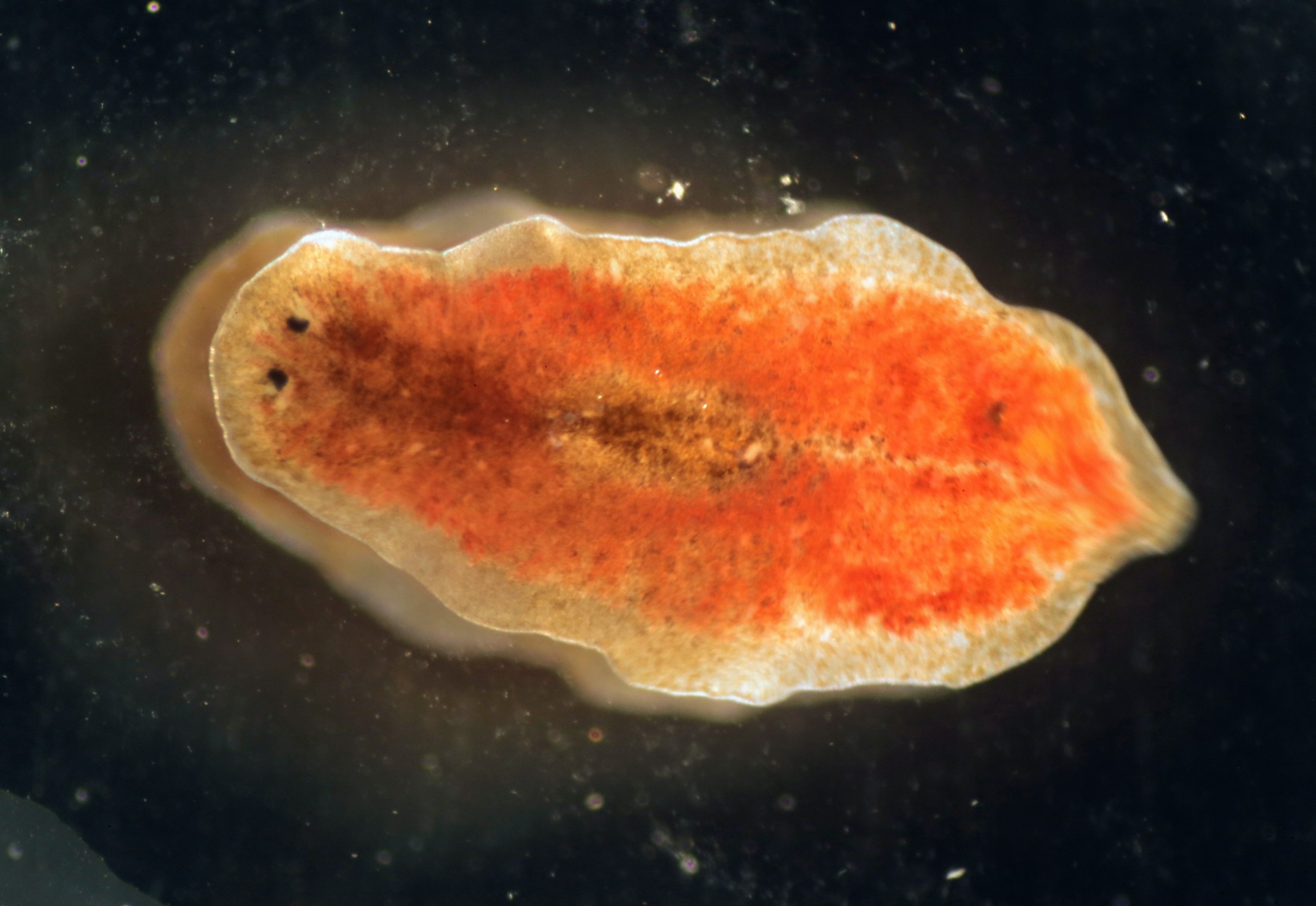
A new wave of mental health research may come from an unexpected source – tiny pond-dwelling worms
In the dimly lit laboratories of the University of Reading, a group of researchers huddles around an aquarium filled with tiny flatworms, their movements barely perceptible. These planaria, often seen merely as a curiosity, are at the forefront of a revolutionary approach to mental health research. While they lack the intricacy of mammalian brains, striking similarities in their responses to psychiatric medications suggest they may hold the key to new treatments for serious conditions, such as schizophrenia, without the ethical dilemmas linked to traditional animal testing.
Worms aid mental health research
Scientists from the University of Reading have recently shown that planaria can effectively respond to psychiatric medicines, paralleling the behaviors observed in mice and rats. In a groundbreaking study, when exposed to haloperidol, a drug commonly prescribed for mental illnesses, these worms exhibited marked decreases in activity akin to reactions in larger animals. “This discovery bolsters the growing evidence that organisms as simple as planaria could prove invaluable in neurological research,” remarked Professor Vitaliy Khutoryanskiy, who led the investigation. “The ethical implications of using such creatures versus conventional lab rodents cannot be overstated.”
Remarkably, past research has employed planaria to investigate conditions such as epilepsy and substance addiction, as these creatures exhibit withdrawal symptoms analogous to those seen in mammals. Now, the findings suggest their role could expand significantly into testing medicines targeted at hallucinations and psychotic disorders. A staggering one in 69 adults in the UK remains on long-term antipsychotic medication, spotlighting the urgent need for innovative research avenues.
Replacing lab rodents
The landscape of research involving animal subjects is fast evolving. In 2023 alone, over 1 million mice and rats were utilized for research within the UK, according to government data. A report from the Animal Research Coalition indicated that the usage of rodents in neuroscience has surged from 20% in the 1980s to a remarkable 50% by the 2010s. Despite efforts to adopt more humane research practices, rodents continue to dominate laboratory settings.
Planaria present a promising alternative capable of drastically reducing the number of rodents required for neuroscientific testing. The researchers explored the interaction of cyclodextrins—sugar molecules that can effectively enhance the solubility of drugs like haloperidol. Interestingly, while these complexes increased the drug’s solubility nearly 20-fold, the capacity for haloperidol to penetrate the worms was paradoxically limited by the strength of its binding within the cyclodextrin cavity.
Sugars change drug behavior
Through extensive analyses, scientists confirmed stable 1:1 inclusion complexes of haloperidol and cyclodextrins existing in an amorphous state. This reveals the duality of the improvements made in dissolving the drug while potentially altering its bioavailability in living organisms. “Understanding these interactions is crucial, as they dictate how effectively a drug can function within a biological system,” explained Dr. Eleanor Simons, a pharmacologist collaborating on the research.
Impact on mobility tests
To assess the efficacy of the drug, the research team subjected the planaria to mobility tests. Pure haloperidol noticeably reduced the worms’ movement in a dose-dependent manner, emulating the catalepsy effects typically seen in mammals. In contrast, the cyclodextrin complexes induced a less pronounced effect, likely due to haloperidol being bound too tightly within the sugar molecules. Even cyclodextrins alone had a slow-down effect on the worms, opening avenues for further exploration into drug interactions.
Worms teach mental health science
The implications of this research extend beyond the laboratory and into academia. The University of Reading has incorporated the findings into its undergraduate pharmacology courses, offering students hands-on experience with these microscopic creatures. “Students witnessing the effects of haloperidol on planaria gain a better grasp of neuropharmacology,” noted Professor Khutoryanskiy. “This early education fosters a culture of innovation in ethical research methods.”
As young scientists engage with this research, they are encouraged to think critically about alternatives to traditional testing. The experience helps them realize that substantial outcomes can arise from using simpler models that prioritize animal welfare. This shift promises not only to cultivate technical skills but also to inspire a generation imbued with a sense of responsibility towards ethical scientific practices.
- Planaria can exhibit withdrawal symptoms similar to mammals.
- Haloperidol reduces planaria mobility in a dose-dependent manner.
- Cyclodextrins can enhance drug solubility but may limit delivery in living systems.
As we stand on the brink of a new paradigm in mental health research, the humble planaria proves that sometimes the smallest species can deliver the most profound insights. In their simplicity, these aquatic worms underscore a critical lesson: advancing our understanding of mental health treatments doesn’t always require complex systems; sometimes, it just takes a fresh perspective from the depths of a pond.
Source: www.earth.com

