


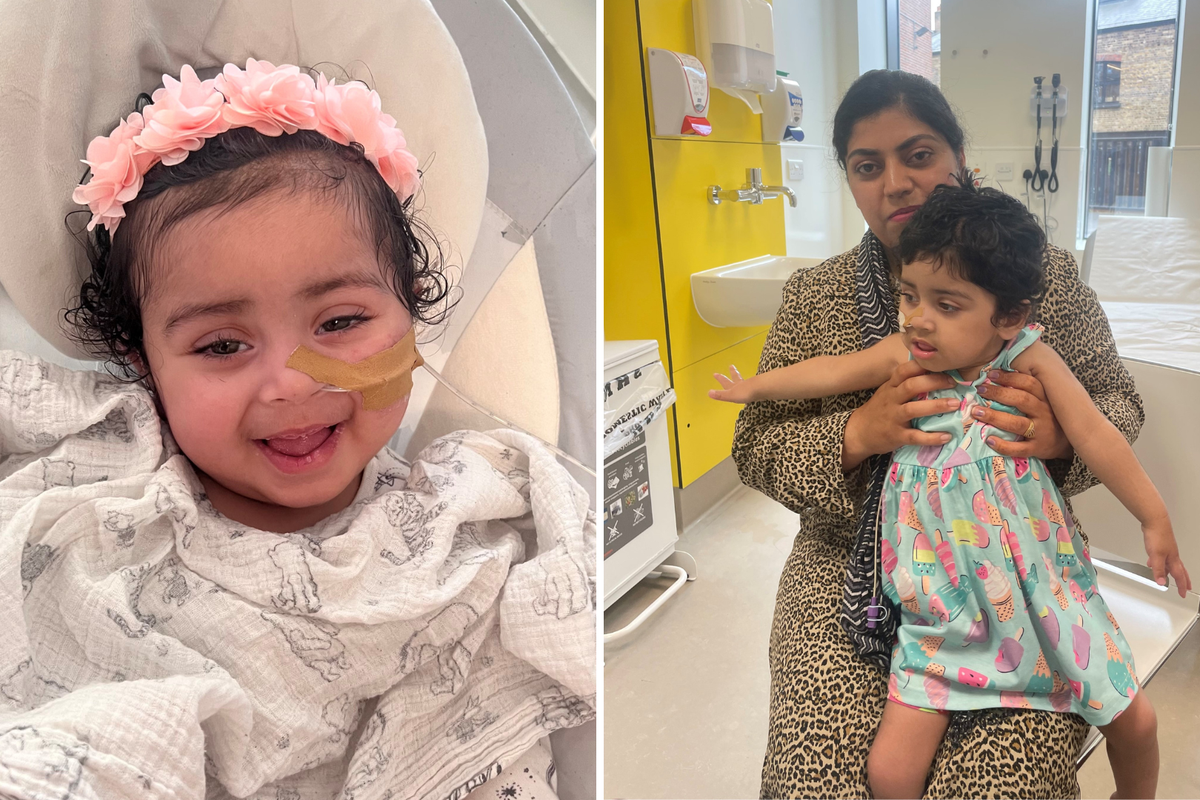
Groundbreaking Gene Therapy Transforms Lives: Gunreet Kaur’s Journey
In a quiet corner of Hayes, west London, three-year-old Gunreet Kaur has become a beacon of hope for families grappling with rare genetic disorders. Diagnosed with aromatic l-amino acid decarboxylase (AADC) deficiency at just nine months old, Gunreet faced a future shrouded in uncertainty. Children with this rare condition often struggle with fundamental controls such as head movement, blood pressure regulation, and heart rate. Until recently, there was little hope for those affected, with many failing to reach adulthood. However, following a pioneering gene therapy treatment earlier this year, Gunreet has begun to defy the odds.
A Revolutionary Treatment Journey
Gunreet’s journey took a pivotal turn in February 2024 when she underwent a cutting-edge procedure at the renowned Great Ormond Street Hospital (GOSH) in London. She became the youngest patient in the UK to receive Upstaza, a revolutionary gene therapy that has the potential to alter the course of AADC deficiency. “It’s astonishing to see Gunreet smiling and reaching for objects, something we thought might never happen,” her mother, Sandeep Kaur, reflects with palpable pride.
- AADC deficiency: A severe genetic disorder affecting dopamine production.
- Gene therapy: Upstaza uses a modified virus to deliver a functioning AADC gene directly to the brain.
- Progress indicators: Gunreet has improved head control, decreased crying, and newfound movements.
A Family’s Struggle
Sandeep recalls the early signs of Gunreet’s condition. “She was well below her milestones compared to her older brother. Initially, we just thought she was a calmer baby. But when she couldn’t hold her head up or reach for items, our fears grew,” she says. At that moment, the family faced what they described as “a dark tunnel,” filled with unanswered questions and anxiety about the future.
AADC deficiency, characterized by a mutation in the gene responsible for producing the AADC enzyme, leads to insufficient dopamine in the brain. Dopamine is crucial for movement and coordination, and without it, many children lead a life of painful episodes and significant developmental delays. According to Dr. Lisa Morrow, a leading pediatric neurologist not involved in Gunreet’s case, “The burden of AADC deficiency is immense—not just for the child but for families and caregivers. The burden of care can take a significant toll on mental health.” She emphasizes the importance of early intervention in improving long-term outcomes.
The Science Behind Upstaza
The advent of Upstaza has been a game-changer in the treatment of AADC deficiency. Administered with remarkable precision, the therapy delivers a working version of the AADC gene directly to the patient’s brain through a robotic surgical tool. “This marks a significant milestone in gene therapy,” notes Professor Manju Kurian from GOSH. “We are no longer just observing; we can actively change outcomes.”
The treatment employs advanced technology that allows for the custom delivery of genes precisely where they are needed, significantly improving the chances for recovery and betterment. Since undergoing this pioneering procedure, Gunreet has made remarkable strides in her development.
Milestones of Recovery
In the months following her treatment, Gunreet has exhibited several key milestones that give her family hope for a brighter future. Sandeep notes the profound change in her daughter’s demeanor: “She cries far less now; she smiles more. The improvement in her overall health is nothing short of miraculous.” Gunreet has not only begun to hold her head upright but also learned how to transition from her stomach to her back. These are monumental achievements considering her initial struggles.
Broader Implications of Gene Therapy
The implications of gene therapy extend beyond individual cases like Gunreet’s. With the NHS now commissioning such cutting-edge treatments, the landscape for genetic disorders is changing rapidly. Professor James Palmer, the NHS Medical Director for Specialized Commissioning, highlights the commitment of the healthcare system to innovation: “This is a powerful example of how groundbreaking treatments can translate into real improvements in patients’ lives. We are seeing the future of medicine unfold before us.”
Research indicates that gene therapies like Upstaza could indeed redefine the future treatment landscape for a variety of genetic disorders. A recent study published in the Journal of Genetic Medicine suggests that the success rates of gene therapies have reached as high as 80% in certain rare disorders. “The future looks promising for children suffering from rare conditions,” says lead researcher Dr. Hannah Thompson. “Continuous advancements in gene therapy open the door to potentially curing what was once deemed incurable.”
The Path Forward
While Gunreet’s journey is filled with hope, it is essential to recognize the road ahead is still fraught with challenges. AADC deficiency may be rare, but it represents the struggles of countless families dealing with genetic disorders. The success Gunreet has experienced thus far offers a glimpse into the potential that gene therapy holds—not just for individuals but for entire families longing for improvement and normalcy.
As Gunreet continues to progress, Sandeep remains optimistic. “We dream of a future where she can walk or even talk,” she says with hopeful determination. “Every day is a step forward, and we are grateful for every single one.” In the unfolding narrative of medical innovation, Gunreet Kaur stands as a testament to the transformative potential of gene therapy, inspiring others to believe in the light at the end of their own tunnels.
Source: www.independent.co.uk

