


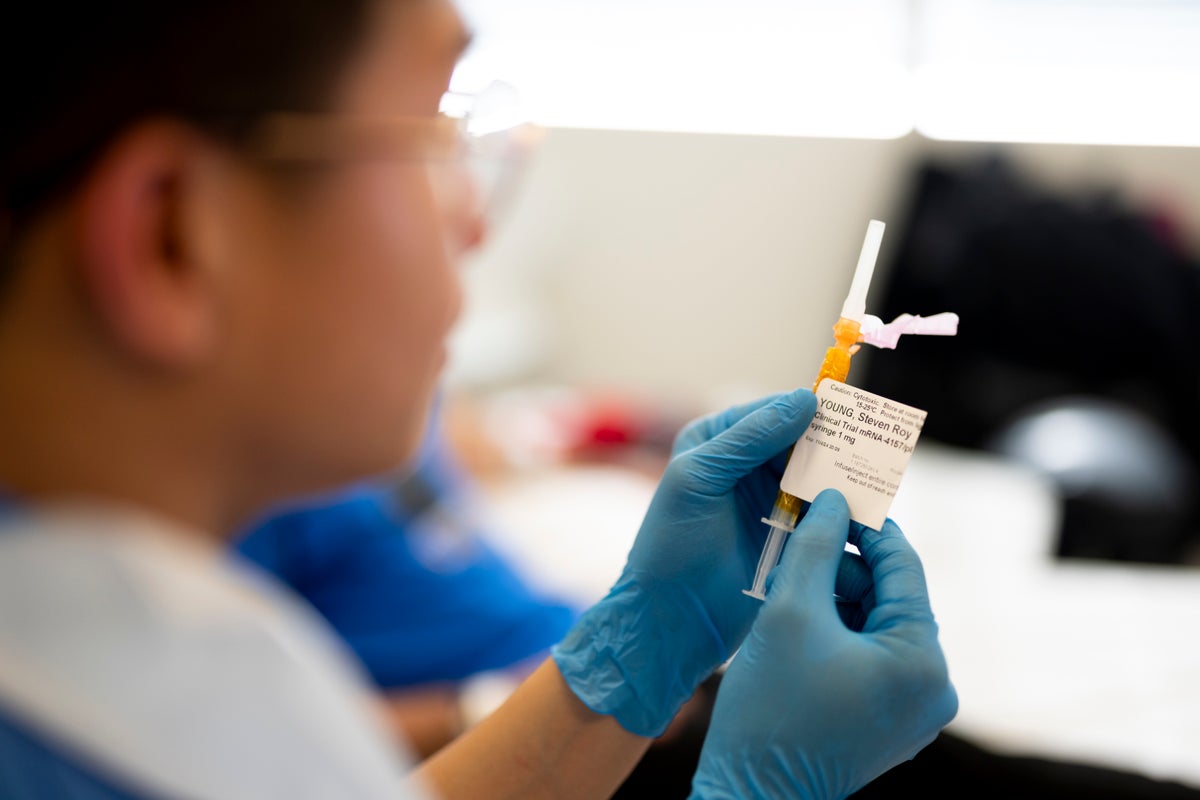
A Revolutionary Shift in Cancer Treatment: The Single-Injection Immunotherapy
In the dimly lit corridors of St. Thomas’ Hospital in London, two patients anxiously await their treatment. One, an elderly man battling aggressive skin cancer, sits alongside a young woman diagnosed with bladder cancer. Both are poised to undergo one of the most transformative treatments in modern medicine—an immunotherapy jab, designed to streamline their battle against cancer.
This March, the National Health Service (NHS) in England will become the first healthcare system in Europe to launch a groundbreaking new immunotherapy injection, nivolumab, which promises not just to enhance patient experience but also to revolutionize the existing paradigms of cancer care. Patients can now receive treatment in a mere 15 minutes, vastly reducing the previous requirement for a lengthy one-hour intravenous drip.
The Mechanism Behind the Breakthrough
Nivolumab, a monoclonal antibody, operates through a sophisticated mechanism. By targeting the PD-1 protein located on T-cells, the drug blocks the cancer cells’ ability to deactivate these crucial immune cells. This lets the immune system resume its job—seeking out and destroying cancer cells with renewed vigor.
Professor Alison Merrick, an oncologist at the Royal Marsden Hospital, explains, “Nivolumab not only represents a significant step forward in treatment but also enhances patient comfort. A short injection means patients can return to their daily lives faster, minimizing the emotional and physical toll that traditional treatments often incur.” A recent study indicated that patients receiving nivolumab reported a significant reduction in treatment-related anxiety and fatigue, a finding that could reshape patient care standards.
Significant Benefits
- Enhanced Efficiency: The jab reduces treatment time from an hour to just 15 minutes.
- Diverse Applicability: Effective for 15 cancer types, including skin, bladder, and esophageal cancers.
- Increased Patient Throughput: The NHS predicts freeing up 1,000 hours of clinician time monthly.
- Improved Patient Experience: Fewer intravenous complications and better overall satisfaction.
Implications for the Healthcare System
The rollout of nivolumab is more than just good news for patients; it represents a critical juncture for the NHS, which faces mounting pressures to optimize healthcare delivery. As Professor Peter Johnson, NHS England’s national clinical director for cancer, highlights, “This treatment will not only help patients but also enhance hospital capacity, allowing clinicians to focus on a greater number of cases.” The estimated 1,200 patients per month benefiting from this treatment will collectively save thousands of hours of treatment time, significantly easing the burden on the already strained system.
Healthcare Minister Ashley Dalton remarked on this breakthrough: “Britain is a hotbed of innovation in the medical field, and this jab is a prime example. We’re committed to ensuring NHS patients are first in line for cutting-edge treatments.” The commitment reflects wider trends in global healthcare, where rapid advancements are reshaping how diseases, particularly cancer, are managed.
A Cautionary Perspective
Yet, while the optimism surrounding nivolumab is palpable, experts urge caution. Dr. Michael Hayward, a leading oncologist, warns, “Although nivolumab is groundbreaking, it’s crucial to remain vigilant about potential side effects and long-term efficacy. Rigorous post-marketing surveillance will be necessary to ensure the treatment’s safety and effectiveness.” A recent meta-analysis indicated that while the therapy showed promise, some patients experienced enhanced immune-related side effects that require careful monitoring.
The Future Landscape of Cancer Treatment
This revolutionary jab fits into a larger puzzle of evolving cancer therapies, including CAR-T cell therapies and personalized medicine approaches. The implications go beyond individual treatments; they speak to an urgent need for the healthcare system to adopt more adaptable strategies that can respond swiftly to emerging clinical evidence.
As we look ahead, the available data solidifies the assertion presented by health analysts: innovations like nivolumab will likely become more commonplace, challenging traditional methodologies and pushing the boundaries of what patients can expect during their cancer journey. A recent survey conducted by the National Cancer Research Institute reported that nearly 70% of oncologists believe that immunotherapies will eventually dominate cancer treatment paradigms.
The narrative unfolding at St. Thomas’ Hospital is emblematic of broader changes rippling through the healthcare landscape. The juxtaposition of hope and caution that patients feel as they receive nivolumab encapsulates a pivotal moment not just for oncology but for medical science as a whole. With rapid advancements continuously emerging, the future of cancer treatment appears brighter than ever, yet it demands a collective commitment to safeguard against potential challenges that lie ahead.
In this evolving landscape, the integration of transformative treatments like nivolumab will undoubtedly redefine patient experiences and outcomes, offering a vital lifeline in a battle that has touched millions worldwide.
Source: www.independent.co.uk

