


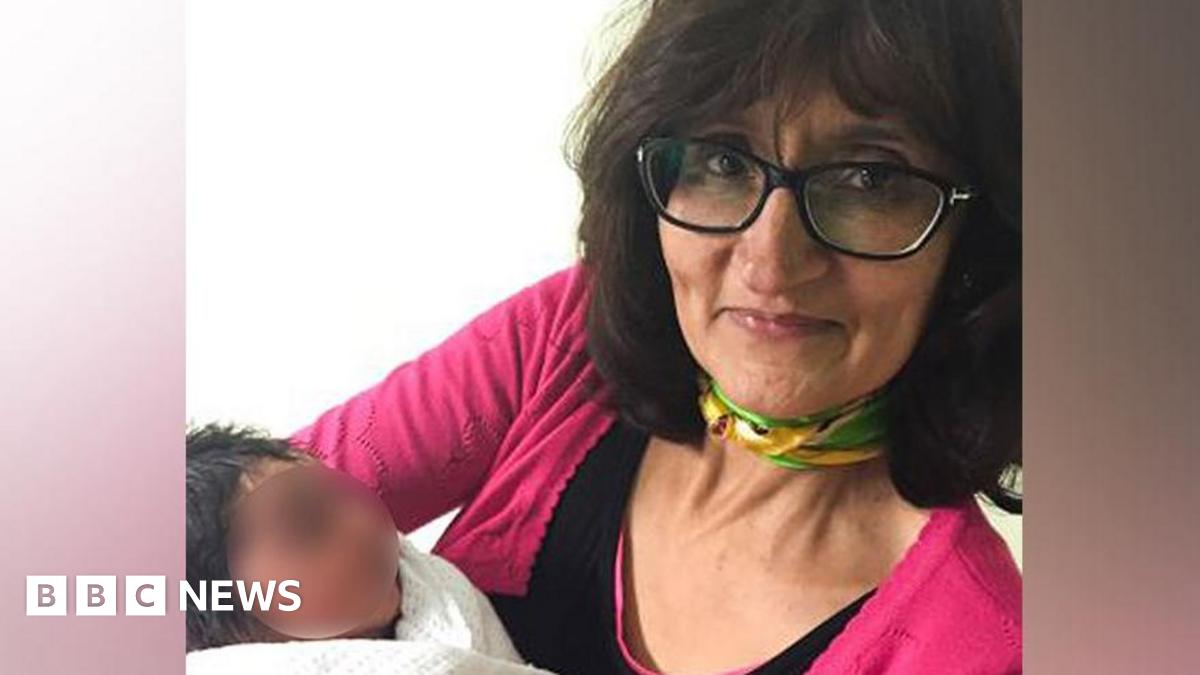
The Silent Void: The Tragic Case of Mukhey and the Questions It Raises About Mental Health Assessments
On a busy main road in north London, the hustle and bustle of daily life masked a tragedy that would resonate throughout the community. Mukhey, a beloved grandmother of two, was killed by a stranger while going about her day. Her husband, Hari, described her as the “centre of our home,” echoing a sentiment shared by many who knew her. Yet, the emotional devastation left in the wake of her untimely death is a silence that echoes painfully—one that her family struggles to articulate. “Her absence has left silence that nothing can fill,” he shared, a poignant reminder of the void left behind.
The Incident and its Aftermath
The brutal stabbing of Mukhey isn’t merely a harrowing incident in isolation; it raises critical questions about the frameworks used to evaluate individuals with severe mental health issues. In the wake of the trial, during which her killer, Debella, was found guilty, the courtroom was filled with deep sorrow and tense confrontation. The presiding judge remarked, “She was a wife, mother, and grandmother, stabbed to death by a complete stranger.” This stark reminder of the tragedy’s reality underscores the precariousness of life when mixed with unaddressed mental health challenges.
The Killer’s Mental Health Assessment
Debella’s mental health history reveals a troubling paradox. As the court heard details of his psychological evaluations, it became evident that he had been assessed as stable and safe for the community by qualified professionals. Yet, behind closed doors, his behavior contradicted these assessments. The family expressed their bewilderment: “At the same time, he was engaging in escalating behaviour outside those assessments, including acquiring weapons and researching extreme violence—behavior that ultimately mirrored the violence he later carried out.” This disconnect raises pivotal questions about the effectiveness and limitations of current mental health assessment models.
- Inadequate Risk Assessment: Experts note that traditional assessments often ignore non-verbal cues that could indicate escalating danger.
- Societal Challenges: There exists a societal tendency to stigmatize mental illness, leading to inadequate public and institutional understanding.
- Need for Holistic Approaches: A shift towards comprehensive evaluations that include behavioral observations could be crucial in preventing future tragedies.
Expert Opinions and Perspectives
Dr. Sarah Thompson, a leading forensic psychologist, highlighted the complexities in accurately assessing dangerousness in individuals with mental health disorders. “Mental health assessments typically prioritize self-reported symptoms,” she said, “yet, an individual’s behavior outside the consultation room—such as weapon acquisition—can be a clearer indicator of potential risks.” Indeed, this is a critical consideration when evaluating someone’s ability to safely navigate society.
Further complicating the issue, Dr. Marcus Lee, a researcher focused on violence in individuals with mental illness, emphasized the gap between clinical assessments and real-world behaviors. “The predictive validity of mental health assessments is questionable when it comes to certain populations,” he asserted. “We need to rethink how we engage with patients, incorporating a wider lens that includes their environmental stressors and behavioral indicators.” This suggestion aligns with a 2021 study published in the Journal of Criminal Psychology, which found that over 60% of violent incidents related to mental illness were preceded by observable behavior changes that were not adequately addressed.
The Community’s Response
In the aftermath, Hari extended gratitude to “brave members of the public” who intervened during the attack, showcasing the importance of community vigilance in the face of escalating violence. However, this incident did not simply highlight individual heroism; it called for a collective responsibility to address the systemic failures that led to Mukhey’s murder. Community leaders and mental health advocates have rallied together, demanding a comprehensive review of the mental health system, advocating for a model that emphasizes not just diagnosis, but also continuous monitoring and support.
In reflecting on this tragedy, the family’s statement was hauntingly clear: “That disconnect is hard to accept. It raises serious questions about how risk is assessed and about whether current models are equipped to detect danger that develops beyond the spoken words of the consulting room.” Their grief is entwined with a crusade for change; they are not only mourning a life but also highlighting a critical public health issue that continues to affect countless families.
The case of Mukhey serves as a wake-up call—a tragic instance that shines a light on the urgent need for reform in mental health assessments. As communities grapple with the implications of her death, the discussions surrounding mental health risk assessment will undoubtedly influence future policies. The legacy of Mukhey is not solely one of loss, but also one of hope—hope that through this tragedy, systemic change could help prevent another family from experiencing such untenable grief.
Source: www.bbc.co.uk

