


Tartu University Hospital: At the Vanguard of 21st Century Care
In a modest room at Tartu University Hospital, the whirring of a 3D printer fills the air, slowly shaping tablets designed to deliver precise dosages for patients in need. This scene, unfolding in a healthcare facility that dates back to the early 19th century, exemplifies a remarkable transformation: Estonia’s healthcare system, once overshadowed by historical challenges, is now a beacon of innovation. As healthcare systems worldwide grapple with the complexities of 21st-century demands, Tartu stands at the forefront, pioneering advancements that could redefine global healthcare paradigms.
Innovation in Medicine and Technology
Tartu University Hospital is not just a traditional healthcare provider; it is a research powerhouse with over 330 ongoing projects aimed at revolutionizing patient care. As radiologists work to integrate artificial intelligence in analyzing medical images, pharmacists experiment with 3D printing technology, pushing the boundaries of patient-specific treatment protocols.
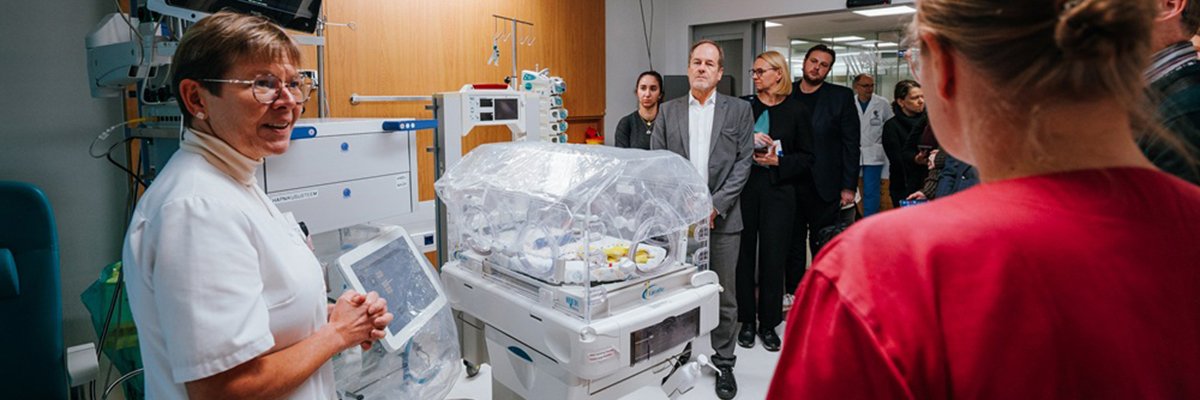
“Our aim is to marry cutting-edge technology with compassionate care,” says professor Tuuli Metsvaht, an expert in pediatric intensive care and pharmacotherapy. “In Estonia, our size allows us agility in adopting new methodologies,” she adds. “We can implement and iterate quickly—what we call ‘small is beautiful.’” This nimbleness has yielded impressive results. Since 1991, Estonia’s child mortality rate has plummeted from 1.75% to 0.21%, making it one of the lowest globally, notably superior to the UK’s 0.45% rate for similar demographics.
Designing Wellness
The hospital’s physical environment reflects its forward-thinking ethos. The new children’s building integrates soft furnishings and supportive spaces designed to promote bonding between parents and newborns, tackling issues like neonatal depression head-on. Such innovations extend beyond mere aesthetics; they represent a holistic approach to healthcare that considers emotional and psychological well-being during critical development stages.
- State-of-the-art facilities, including 3D-printed medications.
- AI-powered diagnostics enhancing medical imaging.
- Supportive environments catering to newborn bonding.
Estonia: The Technology Leapfrog
Estonia, a nation of just 1.3 million residents, exemplifies rapid technological advancement following its independence from the Soviet Union in 1991. While it may be economically behind wealthier European nations—its GDP is just under two-thirds of the UK’s—its healthcare innovation landscape is leaps ahead. Centralized digital records and paperless prescriptions have been operational since 2010, creating a streamlined and efficient healthcare system.
“Estonia offers a unique laboratory for healthtech startups,” states Ain Aaviksoo, managing director of Mentastic. “We are focused on exporting our innovations, particularly to markets like the UK, which has a more flexible regulatory framework.” This strategic alliance allows startups like Mentastic to leverage the UK’s robust infrastructure and research capabilities, positioning themselves for success on an international stage.
Collaborations Across Borders
The nature of these collaborations often hinges on shared values regarding data privacy, as both the UK and Estonia adhere to the EU’s General Data Protection Regulation (GDPR). Aaviksoo highlights how this shared understanding facilitates smoother interactions. “We ask for consent dynamically, informing users at every step,” he adds. “This empowers individuals and fosters trust in our systems.”
As healthtech companies from Estonia make inroads into the UK marketplace, they are navigating challenges inherent in any healthcare system. Andres Mellik, CEO of healthtech firm Cognuse, observes, “While we aren’t looking to replace professionals, we recognize the significant demand for services. Technology is crucial in alleviating systemic queues.”
Using Data to Define Future Health
Innovation also extends into the genomic landscape. The Estonian Biobank houses DNA samples from 214,000 residents, with a recent portal launch allowing participants to analyze their genetic profiles. This integration of genomic data with healthcare practices could revolutionize how individualized medicine is approached in the near future.
“Our data reveals crucial insights, from ancestry to medication suitability,” explains Peeter Padrik, CEO of Antegenes, a biotech company utilizing this wealth of genomic information for early cancer detection. “Estonia is our test bed, allowing us to refine our technologies. The UK represents a promising market where we can scale these innovations effectively.”
Challenges and Bright Prospects
Yet, as Tartu University Hospital and its partners embark on this journey, they confront systemic challenges prevalent in healthcare delivery. Conditions necessitate constant adaptation within the NHS, characterized by complex procurement and deployment processes. Rebecca Willis of 6B Health notes, “Navigating healthcare systems is always a challenge. However, the spirit of collaboration between Estonia and the UK holds potential for innovative breakthroughs.”
With bright minds converging from across sectors and borders, Tartu University Hospital is more than just a medical institution—it is a revolutionary force in the world of healthcare innovation, proving that even small nations can achieve global impact. As Estonia continues to redefine its healthcare landscape, we observe a vivid tapestry of technology and care weaving into a brighter future.
Source: www.computerweekly.com

