


David Dixon
In the heart of Cornwall, a teenager’s bedroom glows with the bright colors of a virtual world, where Minecraft blocks and Roblox avatars coexist. For 14-year-old Ainaya, gaming isn’t just an escape; it is a lifeline. “It’s easier to talk to people through gaming rather than professionals you have to wait a long time for,” she explains, her voice imbued with the kind of candidness often associated with youth. It is this duality of gaming—both a refuge and a potential disruptor—that has drawn researchers and developers to exploit its therapeutic implications through the innovative project “Ace of Hearts.”
The Intersection of Gaming and Mental Health
A project birthed from the collaboration between Falmouth University and local youth, Ace of Hearts aims to address the critical issue of adverse childhood experiences (ACEs). From mental health experts to game designers, the project employs an arts-based methodology to delve into the complex psyche of today’s youth. “Mental health is a serious topic, and anything you can do to help young people who are suffering is worth it,” says Graham Smith, a software designer working on the initiative. His assertion highlights a crucial ethos: using the gaming medium as a pathway toward emotional resilience and awareness.
Understanding Adverse Childhood Experiences
Research indicates that half of mental illnesses manifest by age 14, with three-quarters appearing by age 24. The ACE study offers a framework for understanding how early life stressors affect later health outcomes. Typical adverse experiences include:
- Bereavement
- Poverty
- Parental substance abuse
- Domestic violence
With the backdrop of these pressing issues, the developers at Falmouth University have designed a game that not only entertains but educates. “The main purpose of the game is to get people to talk about it afterwards,” Smith elaborates. It’s an approach rooted in a unique understanding of how young people’s identities and emotions are intertwined with their digital lives.
The Art of Engaging Young Minds
The ATTUNE project, underpinned by a £35 million funding initiative from UK Research and Innovation, leverages diverse artistic methods to explore mental health among adolescents. Ainaya and her peers participated in creating Ace of Hearts, offering their insights on navigating complex emotional landscapes. “Some people have a negative view of gaming, but that’s old-fashioned. They haven’t grown up with our games,” she remarks, embodying the generational shift in perception. Gaming, once viewed as a sedentary pastime, is now recognized as a vibrant tool for connection and self-expression.
Empathy and Technology
Psychiatrist Prof. Kamaldeep Bhui, a principal investigator in the ATTUNE project, underscores the importance of understanding both the harms and benefits of gaming in mental health contexts. “Games can be a cause of harm or addiction, but they also provide a platform where young people can feel safe and playful,” he stresses, advocating for a balanced perspective. His thoughts evoke ongoing debates in psychology and education regarding how technology can serve as both a friend and foe in youth engagement.
A Diverse Medium for Healing
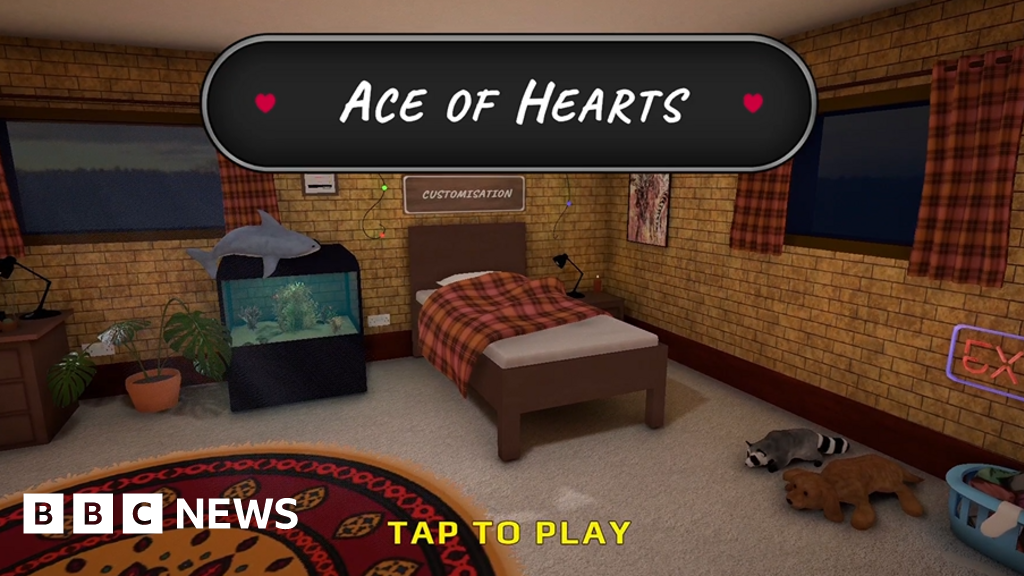
The Ace of Hearts digital landscape is designed to mimic a typical teenager’s room, filled with relatable artifacts that resonate with its young players. As players navigate through challenges reflecting real-life scenarios, they are prompted to engage in critical conversations, thus breaking the stigma surrounding mental health. According to Smith, the strategic use of relatable environments fosters empathy and reflection—a crucial element for adolescents grappling with difficult experiences.
Future Implications
The ATTUNE program will continue to explore how and why mental health needs evolve among young populations. This research is not only academic; it aims to inform practical interventions that can alter the mental health landscape significantly. “Understanding what makes some young people resilient and others vulnerable can guide us in crafting proactive solutions,” Bhui asserts.
As Ace of Hearts squares off against traditional methods of addressing mental health, it beckons a broader conversation. Could the gaming world hold the key to unlocking dialogues about adversity, paving the way for more compassionate societies? While it remains to be seen how deeply ingrained these approaches will become in mainstream therapy, one fact remains clear: gaming has grown from a passive consumption of entertainment into an active participant in shaping young lives and futures.
Source: www.bbc.com

