


Tiny Triumphs: How Small Amounts of Exercise Transform Health
Imagine a busy office on a Tuesday morning. Employees juggle deadlines, coffee cups, and digital distractions, often neglecting one key component: their health. Most believe that real fitness requires an hour in the gym, yet new evidence suggests that just a few minutes of proper exercises can be revolutionary. A recent study published in the European Journal of Applied Physiology found that a mere five-minute daily strength workout significantly enhanced both physical fitness and mental health among sedentary individuals. This challenges not only entrenched beliefs in the fitness community but also practicalities in our everyday lives.
The Routine That Changed Everything
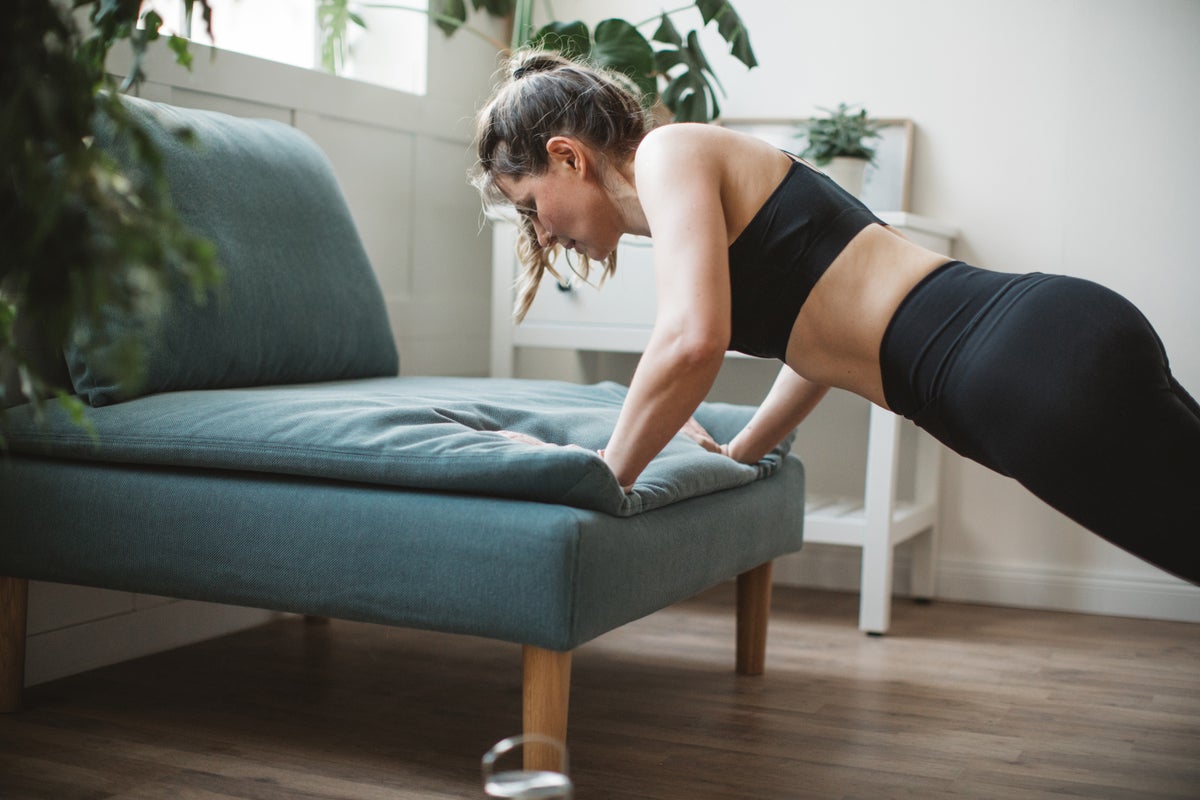
The study involved 22 volunteers, primarily comprised of ‘healthy but sedentary’ individuals aged 32 to 69. Their workout, simple yet effective, revolved around progressive variations of basic exercises: bodyweight squats, press-ups, sit-ups, and calf raises. Here’s a breakdown of what participants did:
- Chair squat x10
- Wall press-up x10
- Chair recline x10
- Heel drop x10
Under controlled conditions, participants executed ten repetitions of each exercise at a specific tempo, emphasizing a slow descent of five seconds followed by a quick ascent. This structure fostered what researchers call “progressive overload,” essential for making gains. Once they could execute the regimen comfortably, individuals were instructed to progress to more challenging variations, like one-leg chair squats or pistol squats.
The Science Behind Small Steps
Dr. Richard Blagrove, a senior lecturer in physiology at Loughborough University, notes, “The evidence shows that even very small amounts of exercise convey health benefits. Just burning an extra 70-100 calories a day can reduce mortality risk significantly.” This aligns with findings published in the British Journal of Sports Medicine, which further affirms that a single set of challenging resistance exercise can lead to improvements in functional performance.
Such findings underscore the misconception that effective exercise must be lengthy or intense. In fact, the core of this research relies on the idea that small, consistent actions can create profound changes in physical and mental well-being.
Real-Life Implications for Everyday People
This debate resonates with anyone who’s ever struggled to fit exercise into a hectic schedule. Joe Wicks, a prominent fitness advocate, advocates for tiny workouts that fit into daily life. “I often see two groups in the workplace—those who don’t exercise at all and those who find short bursts of activity manageable. It’s clear that even minimal exertion can lead to improved energy levels and mental health,” he explains.
Wicks conducted a series of workplace interventions that revealed how the latter group displayed significantly better overall well-being. “A quick session of movement—whether a walk or a brief home workout—can uplift spirits and reduce stress,” he adds, underscoring the importance of those incremental efforts.
Exercise Snacking: The New Fitness Trend
Emerging trends now embrace what experts refer to as “exercise snacking,” a term for brief bouts of physical activity interspersed throughout the day. Recent studies from the University of Essex and University of Suffolk support this approach, showing that just 16 minutes of activity, spread over an eight-hour workday, can counteract the negative effects of prolonged sitting.
“This method adheres closely to the SAID principle—Specific Adaptations to Imposed Demands. The more we demand of our bodies, the better they adapt,” remarks Dr. Julian Smith, a researcher in applied sports science. “Real-world application of these principles allows individuals to incorporate exercise efficiently, potentially revolutionizing sedentary lifestyles.”
Taking Action: Simple Steps for Lasting Change
The essence of effective exercise lies in actionable steps that accommodate busy lives. Here’s a basic framework that encourages incorporating movement efficiently:
- Push: Wall press-up x8-12
- Pull: Bent-over row with a rucksack x8-12
- Hinge: Good morning x8-12
- Squat: Chair sit-to-stand x8-12
- Carry: Suitcase carry with rucksack x8-12m
Perform each exercise one to three times throughout the day, perhaps right after waking or during a coffee break. Even while waiting for a kettle to boil, these small but significant actions can accumulate into impactful changes.
As this body of research illustrates, the notion that one must devote extensive hours to fitness is rapidly becoming obsolete. Those who grasp the transformative power of small changes can experience substantial benefits, not merely in physical strength but also in mental resilience. In a world where time is often the enemy, these revolutionary findings offer a hopeful pathway toward engaging with our physical health, reminding us that every small step counts.
Source: www.independent.co.uk

