


Could a blood test for an Alzheimer’s-related protein help predict disease risk years before symptoms begin?
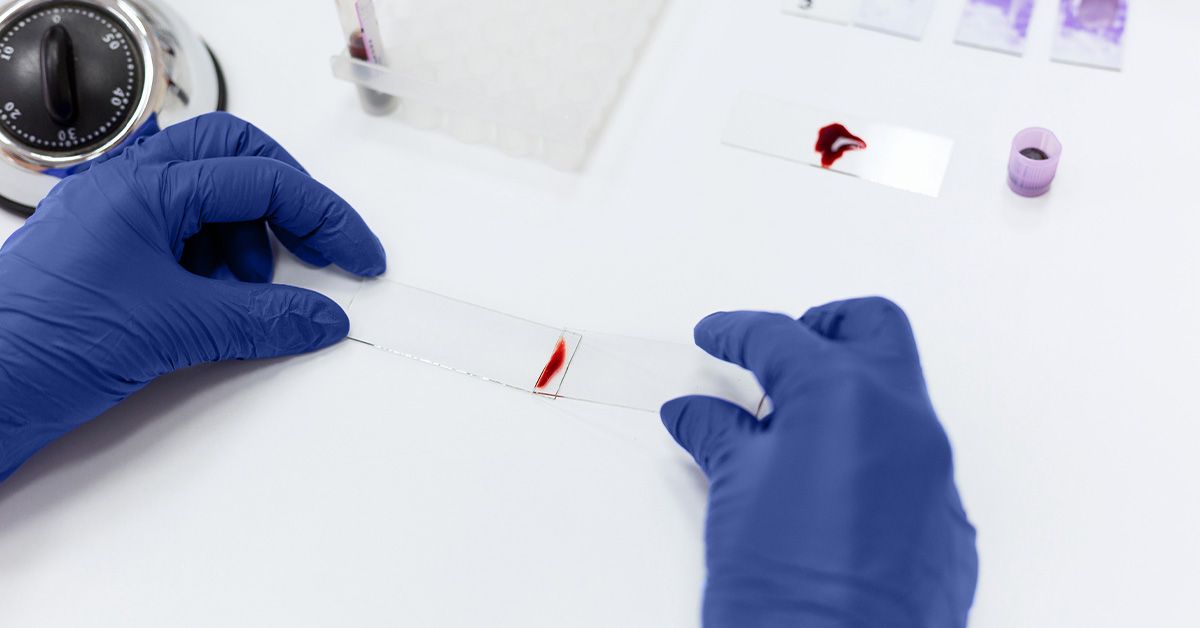
In a sunlit research lab tucked within the halls of the State University of New York at Binghamton, Dr. Ian McDonough peers intently at a series of blood samples. Each vial represents a story yet to unfold—a potential glimpse into the cognitive future of its donor. The stakes here are monumental: doing nothing could mean missing a crucial opportunity to preemptively manage Alzheimer’s disease long before its symptoms manifest.
The latest study published in JAMA Network Open posits that analyzing blood levels of p-tau217, a phosphorylated tau protein, may allow researchers to predict the risk of developing dementia in older women as much as 25 years before symptoms emerge. “This is a game-changer,” McDonough reflects. “If we can identify those at heightened risk, the hope is that lifestyle interventions can be implemented early, potentially delaying the onset of the disease.”
The Promise of Blood-Based Biomarkers
Blood-based biomarkers for Alzheimer’s disease offer a scalable and cost-effective alternative to more invasive and expensive diagnostic methods like imaging scans or cerebrospinal fluid (CSF) analysis. Currently, the traditional methods involve:
- Expensive brain imaging scans to assess structural changes in the brain.
- Invasive procedures to collect cerebrospinal fluid, which can be uncomfortable and inconvenient.
- Time-consuming evaluations of cognitive and neuropsychological function.
This shift toward blood testing is welcomed by both patients and researchers. As McDonough states, “The beauty of a blood test is its accessibility. It can be administered in a physician’s office without the extensive setup required for imaging or CSF analysis.”
Understanding Alzheimer’s Disease and p-tau217
Alzheimer’s disease is characterized by the abnormal accumulation of amyloid-beta plaques and tau tangles in the brain. Among these, p-tau217 stands out as a newer biomarker that more accurately reflects the brain’s neurodegenerative process. Recent research has demonstrated that:
- p-tau217 levels can predict future cognitive decline.
- These biomarkers appear well before clinical symptoms of the disease arise.
- The presence of p-tau217 correlates closely with traditional Alzheimer’s biomarkers found in CSF.
Longitudinal studies have demonstrated that high levels of p-tau217 in the blood correlate with increased risk for mild cognitive impairment (MCI) and eventual dementia, making it a critical player in Alzheimer’s research.
Longitudinal Insights from the Women’s Health Initiative Memory Study
The WHIMS study included 2,766 cognitively healthy women aged 65 to 79 years, establishing a long-term foundation to study cognitive outcomes. Over a span of up to 25 years, researchers tracked cognitive health in these women. The findings are staggering: of the participants, 1,311 developed either MCI or dementia during the follow-up period.
“Consistent with earlier trials, we observed that women with elevated p-tau217 at baseline were significantly more likely to experience dementia or MCI later,” says Dr. Mariana Ortiz, a lead researcher in the study. This underscores the potential of the biomarker for early intervention strategies.
Demographic Variability and Predictive Accuracy
Interestingly, the study revealed how demographic factors such as age and genetic predisposition interacted with p-tau217 levels. Specifically:
- The association between p-tau217 and dementia risk was stronger in women over 70.
- Women carrying the APOE ε4 gene, known to heighten Alzheimer’s risk, showed higher susceptibility based on their p-tau217 levels.
- A surprising observation found that while Black Americans face a higher overall risk of dementia, the predictive power of p-tau217 was less pronounced in Black women compared to their white counterparts.
As McDonough notes, “This indicates we are dealing with a complex interplay of biology and environment. A one-size-fits-all approach won’t work; we must tailor our strategies to specific subgroups, especially when it comes to high-risk populations.”
Challenges and Future Directions
Despite the promising results, several hurdles remain in the integration of blood-based biomarkers into clinical practice. These include:
- The need for standardized procedures to ensure consistent results across different laboratories.
- The complexity involved in interpreting blood test results in a way that is understandable for patients.
- Ethical considerations surrounding the psychological impact of a potential early diagnosis.
Moreover, it is vital to remember that not all individuals with elevated biomarkers will develop Alzheimer’s. As McDonough cautions, “p-tau217 is a useful tool, but it is not infallible. There is much we still don’t know about the broader implications of these levels.”
As the sun sets outside the lab window, casting a warm glow over the vials of precious blood samples, one fact stands clear: the journey toward understanding Alzheimer’s is at a critical juncture. The ability to predict risk through something as simple as a blood test opens new avenues not only for potential treatments but also for a radically different approach to cognition and aging. There is a future where detection precedes despair, and perhaps, the tides of Alzheimer’s can be turned before they churn into stormy seas.
Source: www.medicalnewstoday.com

