


Age-Related Macular Degeneration: A New Dawn with Wireless Implants
In a modest living room in Naples, Italy, a grandmother named Rosa sits with a stack of her favorite novels, the once-vibrant covers now a blur to her aged eyes. At 73, Rosa has lived with age-related macular degeneration (AMD) for over a decade, losing the ability to read the words that once brought her joy. Her world, once painted with vivid colors, has grown increasingly gray, consumed by the creeping shadow of geographic atrophy, the advanced form of AMD that claims the central vision of millions globally.
The Burden of AMD and Geographic Atrophy
A staggering 8 million people worldwide grapple with the advanced form of AMD known as geographic atrophy. This condition wreaks havoc on the retina, leading to irreversible vision loss. Although current treatments can slow its progression, no cure exists. For those affected, daily life transforms dramatically; they rely on low-vision aids like specialized magnifiers and glasses to perform mundane tasks such as reading and recognizing faces.
- Geographic Atrophy: The advanced stage of AMD leading to severe vision impairment.
- No Cure Available: Current treatments may slow progression but do not restore vision.
- Demographics: With an aging global population, cases of AMD are expected to rise.
Innovative Solutions: The PRIMA Implant
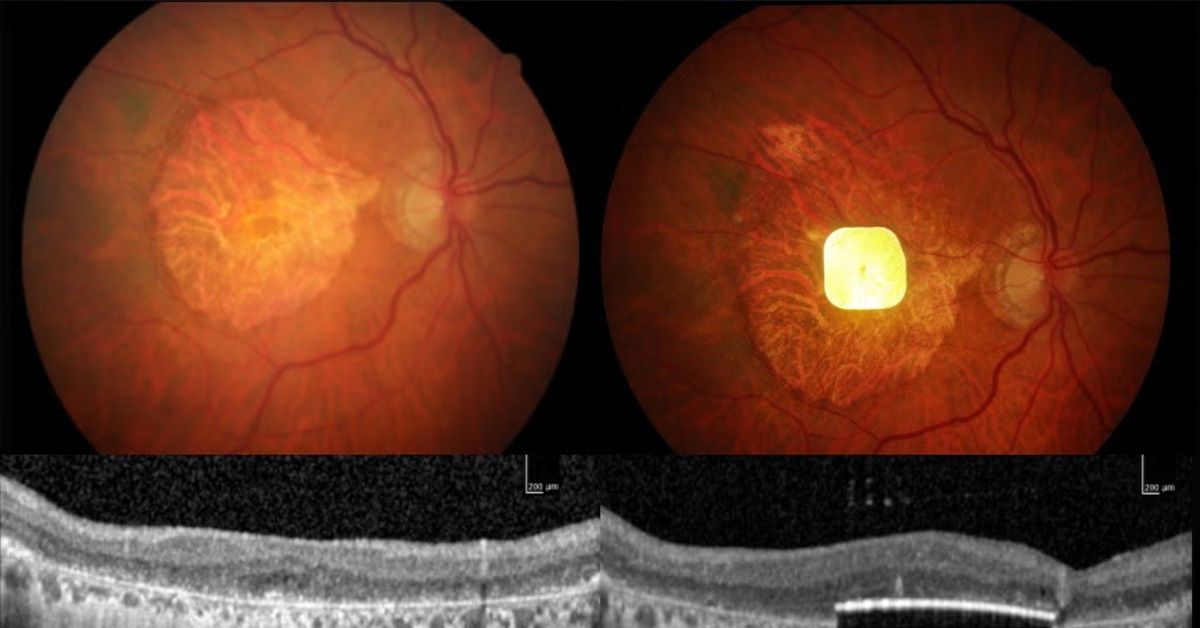
In a groundbreaking study, researchers at Stanford University led by Dr. Daniel Palanker introduced a beacon of hope: the PRIMA wireless retinal implant. This small, innovative device, designed to be inserted into the back of the eye, could signify a turning point for those like Rosa. After a previous successful trial in 2020, which showcased a partial, yet substantial return of vision in four out of five recipients, the team recruited 38 individuals aged over 60 from 17 medical sites across five European countries for a more extensive examination of the implant’s efficacy.
The PRIMA system utilizes a photovoltaic chip that draws power from natural light, allowing it to transmit photographs captured by a special pair of glasses back to the user’s retina. In the latest study, participants who had previously seen worse than 20/320 in at least one eye experienced remarkable transformations. After one year of using the PRIMA system, 26 out of 32 participants reported meaningful improvements in visual acuity, with some even regaining the ability to read letters and numbers at home.
Promising Outcomes from the Study
José-Alain Sahel, MD, a distinguished professor of ophthalmology at the University of Pittsburgh and one of the study’s co-authors, expressed cautious optimism: “This is the first substantial breakthrough in vision restoration for a significant number of patients. More than 80% of those involved could read letters and words, some even reading pages in books.” However, he acknowledged the limitations of the implant, stating, “While 20/20 vision might not be possible, we are committed to improving lives and restoring functionalities like recognizing faces, which many have lost.”
Expert Opinions on the Technology
Dr. Benjamin Bert, a board-certified ophthalmologist at MemorialCare Orange Coast Medical Center, lauded the significance of the PRIMA device, remarking, “This technology not only repurposes remains of functional retinal anatomy but also provides an artificial replacement for the damaged photoreceptor layer in geographic atrophy caused by AMD.” He emphasized the importance of such advancements as the population continues to age.
Yet experts voiced caution. Dr. Jonathan Gloth, a vitreoretinal surgeon, highlighted the trial’s small sample size, noting, “While 80% of the patients achieved clinically significant visual improvement, safety must be further verified through larger studies.” He referenced the serious adverse effects experienced by 81% of participants and the need for refining the implantation technique to minimize complications.
The Road Ahead
The increasing prevalence of AMD globally underscores an urgent demand for innovative treatment solutions. Over one million cases in the United States alone command immediate attention, prompting researchers to dedicate substantial resources to the pursuit of effective therapies. Dr. Bert emphasized, “Any visual improvement can crucially enhance independence and reduce risks associated with diminished sight, such as accidents.”
As Rosa continues her journey through low vision, she dreams of the day when she can immerse herself in her beloved novels again. With promising advances like the PRIMA system, the horizon for patients with geographic atrophy appears brighter than ever.
This burgeoning technology presents an opportunity not only to enhance life quality for millions but also to pave the way for further innovations in the field of ophthalmology. For Rosa and many like her, hope is a powerful ally in the fight against vision loss.
Source: www.medicalnewstoday.com

