


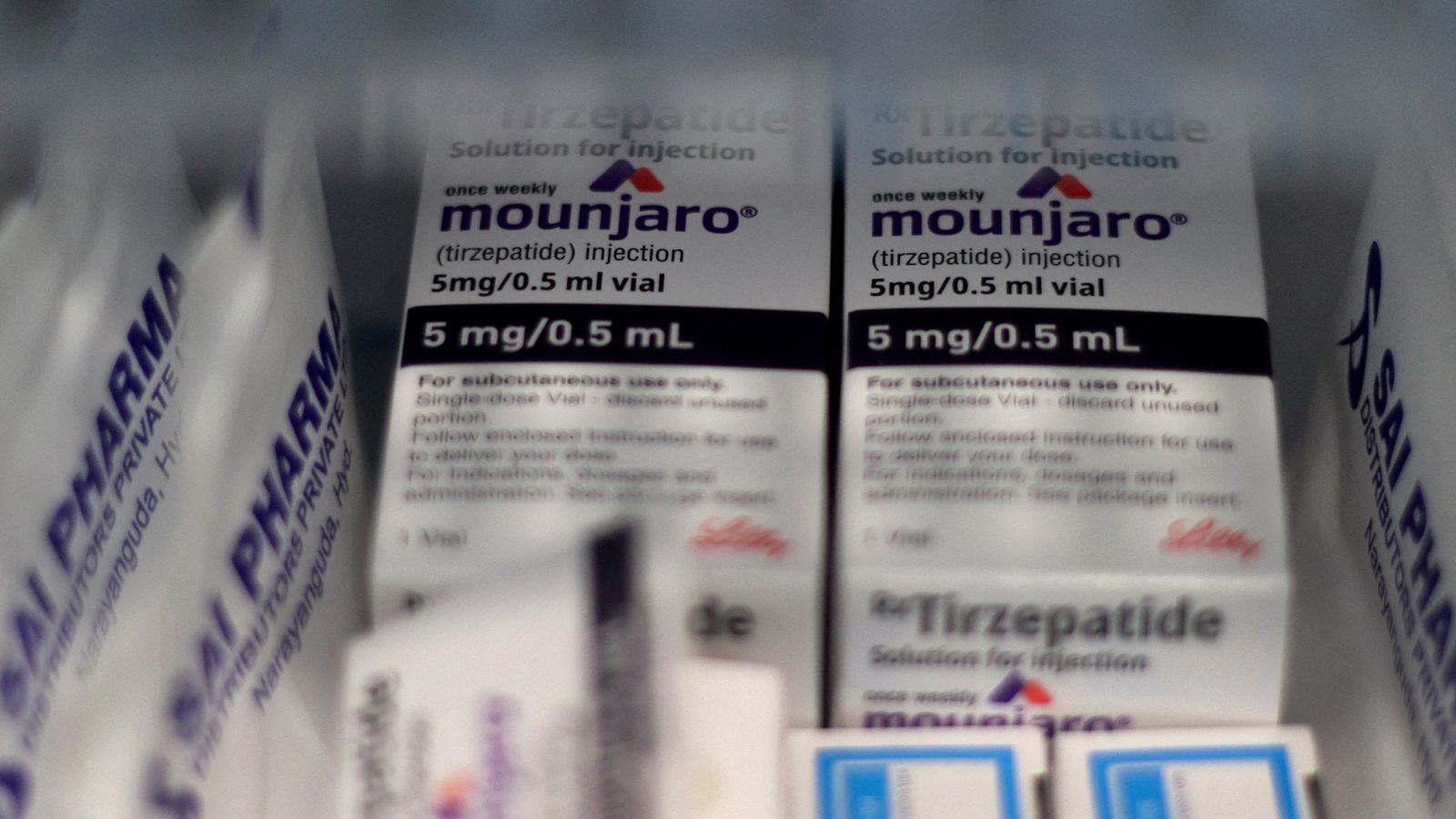
Thousands of Severely Obese Patients Face Delayed Treatment for Mounjaro as NHS Rollout Falters
Gary, a 39-year-old man from Hampshire, stands at a crossroads. Weighing 25 stone (158 kg) and struggling to climb a flight of stairs without gasping for breath, he clings to a glimmer of hope: Mounjaro, the groundbreaking weight-loss injection lauded as the “King Kong” of weight loss drugs. “I was so excited when I read about this drug,” he confides, his eyes filled with determination. “If I had the drug and lost some weight, it could change my life.” Yet, despite his eligibility, his GP surgery has delayed the treatment until at least autumn, he says. “It’s not just about vanity. It would be a life changer.”
A Promised Solution, Yet a Postcode Lottery
According to recent research conducted by Sky News, a shocking disparity has emerged in the rollout of Mounjaro across the UK’s NHS. Although NHS England had planned to offer the drug in GP surgeries by June 23, a Freedom of Information inquiry revealed that only eight out of 42 NHS Integrated Care Boards (ICBs) are currently providing treatment. The remaining boards are mired in uncertainty, leaving many patients like Gary trapped in limbo.
“Giving people open promises and setting them up for disappointment and failure is clearly grossly unfair,” says Dr. Jonathan Hazlehurst, an obesity specialist at University Hospitals Birmingham. His concerns highlight the growing frustration among healthcare professionals as fund allocation delays leave the most vulnerable without necessary care.
Understanding the Burden of Obesity
- Over 3.4 million people in England are eligible for Mounjaro treatment based on NICE criteria.
- Obesity costs the NHS approximately £11.4 billion annually.
- NHS England has only funded treatment for just over 22,000 patients, leaving many without access.
NICE guidelines recommend Mounjaro for individuals with a Body Mass Index (BMI) over 40 who also suffer from at least four weight-related clinical conditions. Despite NICE’s estimate of nearly 97,500 patients who could benefit in the first year, the reality paints a grim picture: a mere fraction will receive treatment. “It shows a profound lack of political will to adequately fund this,” Dr. Hazlehurst adds, echoing sentiments of healthcare providers who find themselves in a tumultuous situation where obesity is often stigmatized.
Stigma and Inequality in Healthcare
The disparity in treatment can be traced back to deeply rooted societal attitudes towards obesity, where simplistic notions of “eat less, move more” overshadow the need for effective medical interventions. “There’s a huge amount of stigma associated with obesity care,” Dr. Hazlehurst remarks. “People suffering from obesity are already at a disadvantage, and the current system only exacerbates their struggles.”
In a society that often vilifies those struggling with weight, many patients find themselves grappling not only with their health but also with feelings of worthlessness. “Obesity isn’t just a personal failing; it’s a complex issue influenced by various factors, including genetics, environment, and socioeconomic status,” explains Dr. Linda Malloy, a behavioral health specialist. Her perspective highlights the need for a more nuanced approach to treatment that recognizes these complexities.
The Financial Dilemma
Mounjaro offers new possibilities for effective treatment, yet financial constraints have led to a cap on the number of patients many ICBs can treat. Dr. Hazlehurst emphasizes that such limitations create a cruel lottery system in which deserving patients may miss out on life-altering treatment. “Imagine telling a cancer patient that they have to wait for years for a treatment that could save their life. No one would accept that, yet for obesity, we are simply not prioritizing patient care,” he explains.
The Road Ahead
Despite the challenges, NHS England maintains it has provided guidance and funding to support the rollout of Mounjaro. “We issued guidance and provided funding in March to all ICBs to support treatment costs,” a spokesperson for NHS England stated. However, Dr. Hazlehurst argues that the current rollout lacks a clear timeline, leaving patients in dire need of help without answers.
For people like Gary, the stakes are painfully high. As he waits and wonders whether the drug will finally become available for him, he becomes acutely aware of the broader implications of this protracted delay. “It’s heartbreaking to think that so many people could benefit from this medication but are being left behind in this system,” he reflects. “I just want the chance to reclaim my life.”
No one should have to navigate such a cumbersome maze while waiting for treatment that could change their lives. As NHS England grapples with financial and political pressures, it remains to be seen whether a solution will emerge to meet the urgent needs of patients desperate for help.
Source: news.sky.com

