


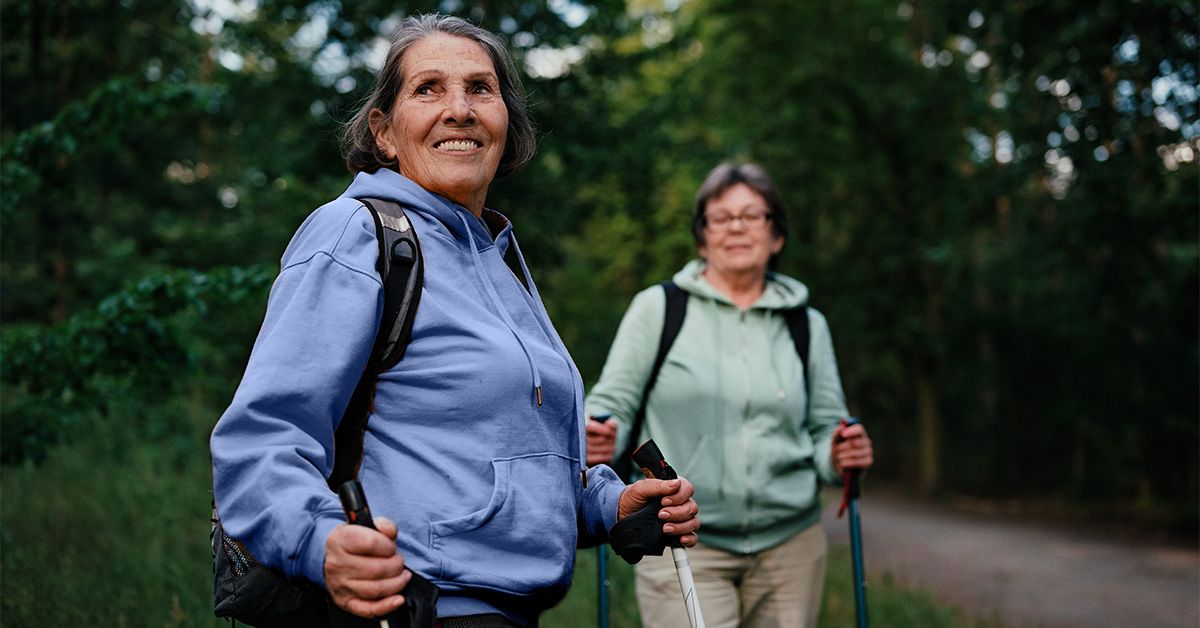
As the sun dipped below the horizon, painting the sky in hues of orange and purple, two older women trekked through a serene forest path in Norway, their walking sticks rhythmically tapping against the ground. While their stroll appeared peaceful, it symbolized a crucial life choice—a decision not just to embrace nature, but to combat the pervasive threat of chronic low back pain. This common affliction haunts millions globally, turning everyday activities into arduous tasks.
Low Back Pain and the Power of Walking: New Research Insights
Chronic low back pain is a tale of duality: it manifests as a common yet debilitating condition affecting over 540 million adults worldwide. “Low back pain is the leading cause of disability globally,” states Rayane Haddadj, a PhD candidate in the Department of Public Health and Nursing at the Norwegian University of Science and Technology. “Identifying modifiable risk factors that can be targeted and easily implemented through public health policy and interventions is imperative.”
Understanding the Epidemic
The World Health Organization categorizes physical inactivity as one of the leading risk factors for chronic diseases. Haddadj’s recent study, published in the influential journal JAMA Network Open, capitalizes on this notion. Data from more than 11,000 participants—averaging 55 years old—from Norway’s Trøndelag Health (HUNT) Study reveals that walking habits significantly influence back health. Haddadj’s research elucidates that individuals who walked over 100 minutes daily exhibited a staggering 23% lower risk of developing chronic low back pain than those walking less than 78 minutes.
Key Findings from the Study
- Walking for more than 100 minutes daily correlates with a 23% lower chance of chronic low back pain.
- The relationship is dose-dependent; increased walking leads to decreased risk, plateauing at around 100 minutes per day.
- While walking intensity plays a role, its impact is less pronounced compared to walking duration.
“Higher daily walking volume lowers the risk of developing chronic low back pain. Even small increases in daily walking were associated with decreased risk,” Haddadj adds, emphasizing the actionable nature of these findings. “As the World Health Organization notes, ‘every move counts towards better health.’”
Expert Opinions
Despite the promising research, skepticism lingers among some health professionals. Dr. Neel Anand, a board-certified orthopedic spine surgeon and director of the Cedars-Sinai Spine Center in Los Angeles, cautions against oversimplifying the relationship between walking and back pain. “Walking does not prevent back pain,” he contends. “Activity helps you manage back pain; it does not guarantee immunity from it.”
Anand elaborates: “There’s a distinction here. Those who are more active generally have a lower chance of experiencing back issues, but connecting walking directly to the absence of back pain is too far a reach.” His insights add a layer of complexity to the narrative, indicating that while activity is beneficial, it is not a foolproof solution.
The Broader Implications
As society grapples with escalating rates of chronic pain and related disabilities, studies like Haddadj’s serve as potential roadmaps for public health initiatives. Initiatives encouraging walking could pave the way for healthier populations while reducing healthcare strain. “Walking is a simple, low-cost, and accessible activity,” Haddadj emphasizes. “Promoting it can significantly alleviate low back pain and other diseases.”
This point resonates with many people in various walks of life, from office workers to seniors. For them, a minor adjustment in daily habits—like opting for a brisk afternoon walk—could yield profound benefits.
The Path Ahead
Future research should explore nuanced aspects of walking, such as optimal timing, environmental contexts, and individual variability in response to increased physical activity. This could unravel more secrets about how movement can mitigate chronic issues and lead to improvements in overall health. “Even modest increases in daily activity can have significant effects on back health and quality of life,” Haddadj concludes, hinting at a future where managing chronic conditions might be as simple as lacing up a pair of shoes.
As evening fell in the forest, the two women continued their walk, each step a small victory against an all-too-common affliction. Though choices about health often come with complexities, in this moment, the conviction was clear: moving forward—quite literally—might be the best medicine.
Source: www.medicalnewstoday.com

