


The Alarming Rise of Gun Violence Among U.S. Youth: A Crisis in the Making
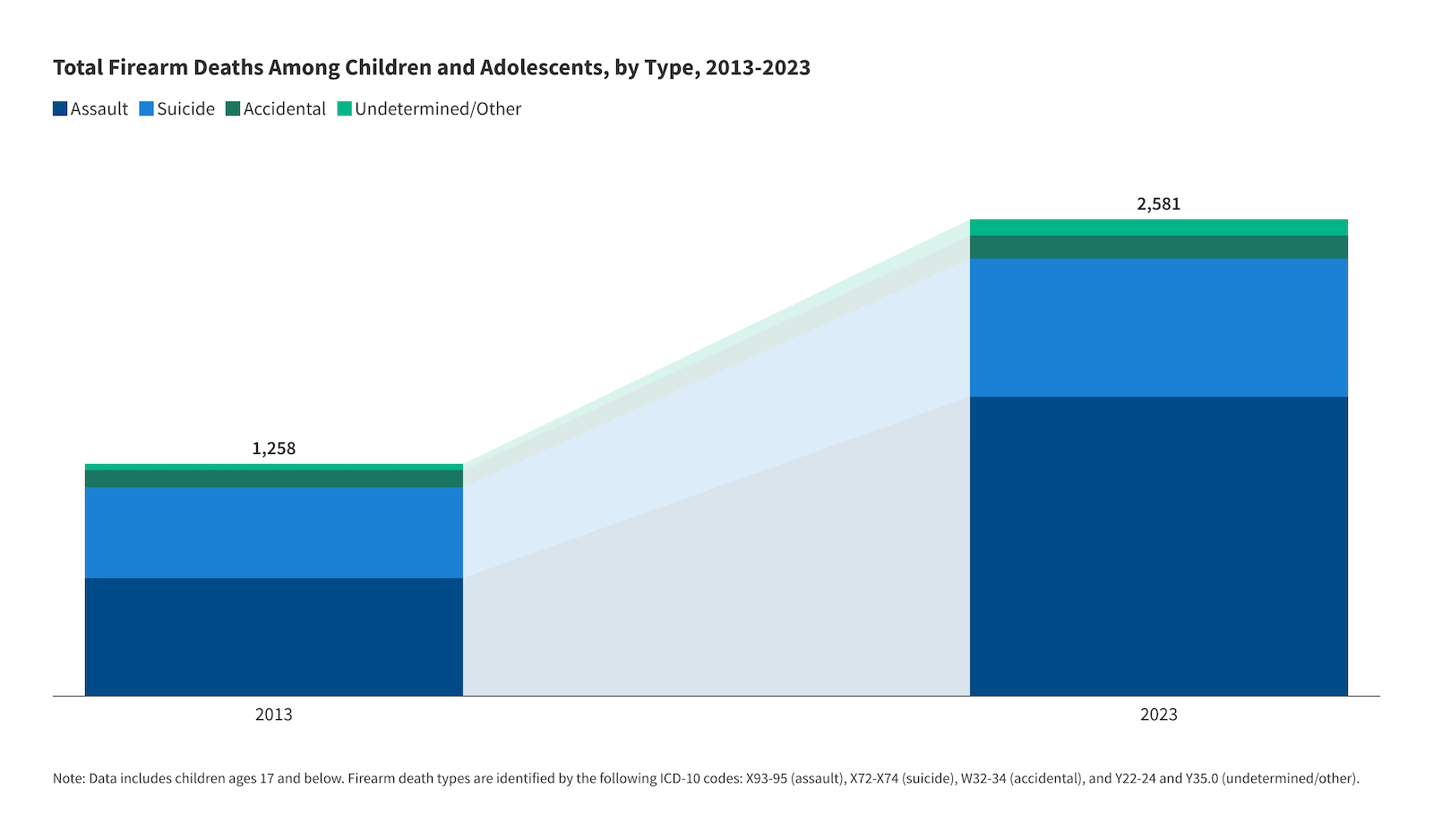
Seven children dead every day. This startling statistic represents a grim new reality in the United States, where gun violence has overtaken car accidents and illness as the leading cause of death among individuals aged 17 and under. By 2023, the landscape of youth mortality had shifted dramatically, illustrating both a national crisis and a desperate call to action. Gun assaults accounted for nearly two-thirds of these deaths, and vulnerable communities, particularly among Black and Latino youth, are bearing the brunt of this deadly trend.
How Have Firearm Deaths Changed in Recent Years Among Children and Adolescents?
From 2019 to 2021, firearm-related deaths increased by a shocking 46%. This alarming trend encompasses the emotional wreckage of families and communities torn apart by senseless violence. In 2023 alone, nearly 21,000 children aged 17 or younger fell victim to gun violence, pushing authorities and policymakers to grapple urgently with the implications of this surge.
“To watch our youth perish at this rate is an unspeakable tragedy,” asserts Dr. Margaret Ellis, a pediatric trauma specialist who has taken part in various community outreach efforts. “We have the tools to make meaningful change, but that change must begin with leadership that prioritizes evidence over ideology.”
Rising Rates of Gun Deaths Among Demographics
The increase in firearm deaths is not uniform; it disproportionately affects certain demographics. The rate of firearm deaths among Black youth has soared to 11.7 per 100,000—a figure that is more than four times higher than that of White youth. The group at greatest risk remains boys, whose firearm death rate exceeds that of females by more than four times. Moreover, 29% of child and adolescent firearm deaths in 2023 stemmed from suicides, highlighting a critical mental health angle in this ongoing crisis.
- Gun Assaults: 63% of all child and adolescent firearm deaths are the result of gun assaults.
- Suicides: In 2023, firearms were involved in 47% of total suicide deaths among children and adolescents.
- Accidental Deaths: Accidental gun deaths accounted for 5% of total firearm deaths in the same year.
The Psychological Toll of Gun Violence
The repercussions of gun violence extend far beyond physical injuries and fatalities. In neighborhoods plagued by gun violence, data indicate a significant rise in anxiety, depression, and PTSD among affected youth. A recent study conducted by the National Institute of Mental Health illustrates that adolescents exposed to gun violence are over 40% more likely to report mental health issues than their peers who remain insulated from such trauma.
“After witnessing gun violence, many youth experience an acute sense of fear that affects their ability to engage in normal activities, like going to school,” explains Dr. Carla Thompson, a clinical psychologist specializing in trauma recovery. “There needs to be a comprehensive response that includes not just preventing gun violence but also addressing its mental health aftermath.”
Community-Based Approaches to Address Gun Violence
Effective interventions are essential in combating gun violence and its adverse effects. Community-based programs focusing on mental health access, conflict resolution, and safe storage of firearms offer pathways to mitigate the growing threat. However, a disconcerting trend has emerged with the Biden Administration’s rollback of various gun safety initiatives, including the dismantling of the School Safety Committee.
State Regulation and Accessibility Issues
Legislation varies widely across states, which directly impacts youth safety. States with robust gun control measures tend to have lower gun death rates among children. For example, Massachusetts reported a firearm death rate of only 0.7 per 100,000, while the District of Columbia topped the charts with a staggering rate of 10.3. A forthcoming report from the CDC highlights that nearly 44% of Americans with children in the home do not store firearms securely, further complicating efforts to safeguard youth.
“Safe storage laws are a critical step towards reducing the risk of unintentional shootings among children,” asserts Johnathan Reed, a public health analyst. “Yet, when these initiatives are reversed, the data shows a regression in safety.”
The Role of Mental Health Services
As gun violence escalates, the availability of mental health services for impacted youth has become increasingly vital. Unfortunately, the current political climate has seen significant budget cuts to mental health initiatives aimed at addressing the needs of children and adolescents exposed to violence. A survey from the American Psychological Association indicated that nearly 60% of youth who had encountered firearm violence reported either unavailable or inadequate mental health care following the incidents.
A Disproportionate Impact on Communities of Color
Communities of color continue to be disproportionately affected by gun violence, with Black and Latino youth experiencing heightened rates of both gun assaults and associated mental health repercussions. Barriers to accessing mental health care are often exacerbated by cultural stigma and financial limitations, creating a vicious cycle that remains unbroken.
“It’s a public health crisis that demands an intersectional approach, combining healthcare access with community engagement,” Dr. Thompson reiterates. “We must rally our resources, so our vulnerable populations are equipped to heal and thrive.”
As the conversation around firearm regulation evolves, communities, policymakers, and healthcare professionals alike must bridge the gap between gun violence prevention and mental healthcare. Only then can we hope to stem the tide of despair and loss afflicting our youth. The implications of this crisis are profound, demanding immediate attention, thoughtful policy implementation, and community resilience to safeguard future generations against the clutches of violence.
Source: www.kff.org

