


Assessing the Impact of Clinical Decision Support Systems in Primary Care: Insights from a Groundbreaking Study
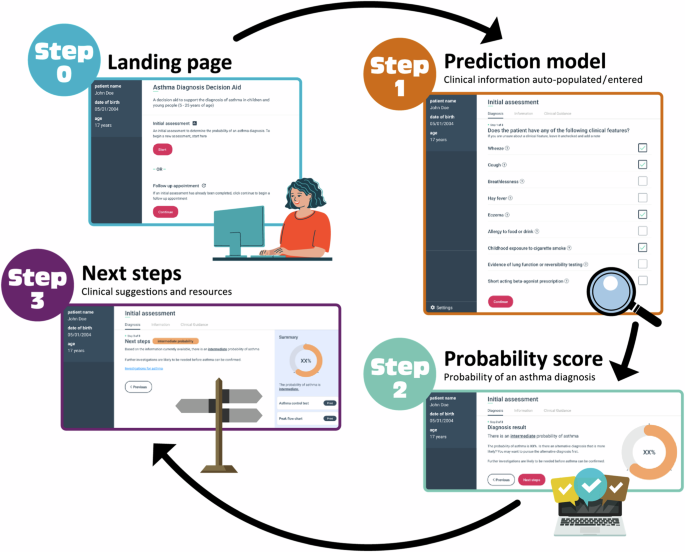
On a brisk March morning in Glasgow, a local general practice saw its first patient being assessed with a novel Clinical Decision Support System (CDSS). The digital tool would not only streamline the diagnosis of asthma but also give healthcare providers a newfound sense of confidence in their diagnostic capabilities. Less than a year later, the implications of this technology would reverberate throughout the healthcare system, prompting not just a reevaluation of how diagnoses are made, but also influencing clinician-patient interactions.
Methodology and Recruitment Challenges
Expressions of interest poured in from 23 practices across six regions, with a promising collective hope of transforming the primary care landscape. However, logistical hurdles emerged quickly; clinical workloads and governance approvals delayed the participation of 11 practices. Moreover, two additional practices faced a significant barrier: the CDSS could not connect to their existing computer systems, particularly EMIS Web, leading to further attrition. Ultimately, ten practices, mainly from NHS Greater Glasgow and Clyde and NHS Lothian, were able to successfully implement the CDSS and conclude their studies by November 30, 2022.
Engagement Metrics
During this study, 75 out of 94 clinicians actively engaged with the CDSS, accessing it 313 times. The median engagement time was recorded at 1.8 minutes per session. Notably, the probability of asthma diagnoses was calculated 165 times, indicating a significant utilization rate among those who participated.
Qualitative Insights from Practitioners
An in-depth qualitative assessment was carried out, involving 11 participants from eight general practices. Interviews ranged in duration from 14 to 38 minutes, averaging around 24 minutes, revealing key themes that encapsulated the user experience with the CDSS.
Theme 1: Experiences Using the CDSS
Training and Preparedness
Overall, participants expressed satisfaction with their initial training, though there were notable requests for additional support. One general practitioner (GP), with 19 years of experience, stated:
“It’s [the CDSS] not complicated; the interface itself is quite apparent and easy to interact with.” (C34, GP, 19 years)
However, others felt ill-prepared. One advanced nurse practitioner articulated the struggle faced when the tool went live:
“When it actually came to it being live… a lot of it was trial and error.” (C40, ANP, 4 years)
Compatibility and User-Friendliness
Clinicians generally found the CDSS user-friendly. “The user interface is quite nice,” remarked one GP, highlighting its intuitive nature. Yet, issues arose with compatibility between the CDSS and primary care software, frustrating users frustrated about missing functionalities.
Theme 2: Impact on Clinical Practice
Many participants noted that the CDSS influenced their clinical decision-making. C37 noted:
“Because it worked out the overall probability for you…that would sway me one way or the other.” (C37, ANP, 17 years)
Conversely, some clinicians reported that the CDSS merely reaffirmed their initial diagnostic impressions:
“It, kind of, reaffirmed what I was thinking rather than changed it.” (C36, GP, 4 years)
Theme 3: Patient Engagement
One of the most promising observations was the CDSS’s role in enhancing patient engagement. By visualizing the diagnostic probabilities, patients felt more involved in the discussion around their health:
“Seeing the symptoms displayed helped her appreciate the process,” shared C41, a GP. (C41, GP, 2 years)
However, not all practitioners embraced screen-sharing; some found it less helpful to display the interface during patient consultations.
Potential Barriers to Adoption
- Challenges connecting to existing electronic health record systems.
- A limited number of suitable cases for CDSS application.
- Participants forgetting to use the tool during consultations.
Expert Perspectives on Future Directions
As healthcare increasingly moves towards technological solutions, the findings from this study illustrate both promise and challenges. Dr. Emily Sanders, a digital healthcare advocate, commented:
“For CDSS tools to be effective, there must be a strong integration with EHR systems, along with ongoing training and support.”
Furthermore, the need for tailored functionality that caters to both experienced and less experienced clinicians is pivotal. A recent study from the European Healthcare Journal emphasized, “The usability and accessibility of clinical decision tools can significantly shape their acceptance in everyday practice,” reinforcing the importance of addressing these challenges upfront.
The journey to evaluate the efficacy of CDSS in primary care is still in its nascent stages. Nevertheless, the potential for solidifying a model that elevates both clinician efficiency and patient satisfaction is promising. As technology continues to forge its path into the clinical arena, the insights gained from these ten practices in Scotland will hopefully guide the next wave of CDSS developments, ultimately reshaping respiratory care.
Source: www.nature.com

