


Could Expertise Slow Down Cognitive Decline? A Study on Expert Birders Answers in the Affirmative
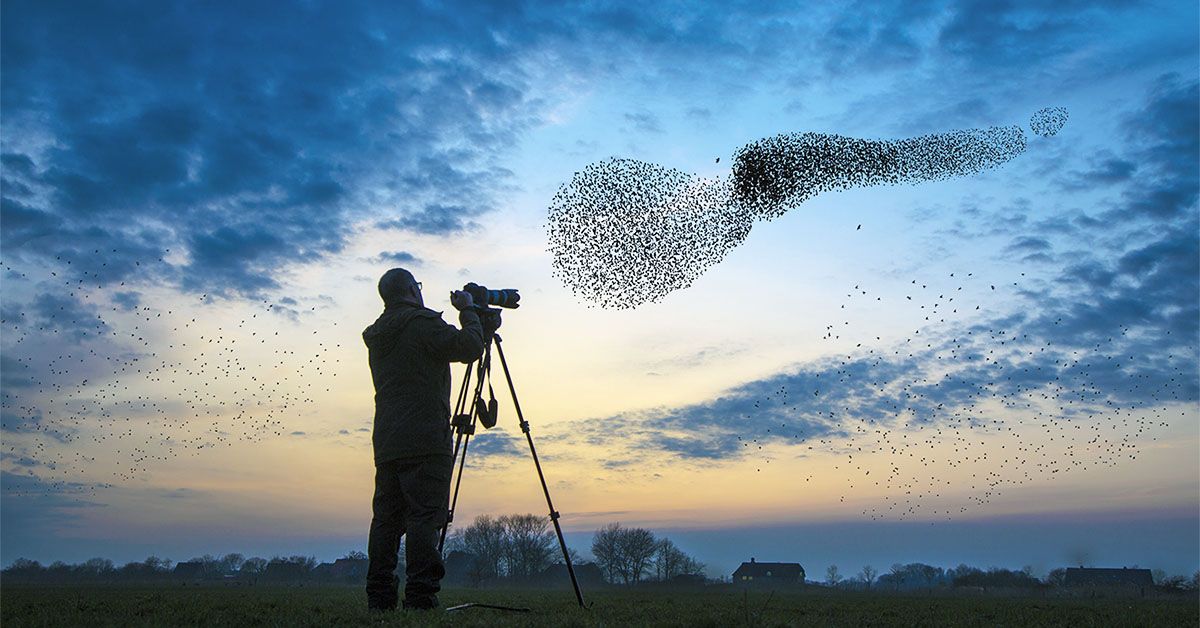
Amidst the rustling leaves of an early autumn morning in Pennsylvania, a group of seasoned birdwatchers peered through their binoculars, scanning the horizon for the first signs of migratory starlings. As each bird took flight, the observers deftly called out its identity, effortlessly exchanging technical jargon and subtle observations that would be lost on the untrained eye. This phenomenon, where expertise combines with passion, may hold the key to sustaining cognitive health as we age, according to recent research examining the brains of expert birders.
The Cognitive Landscape of Aging
As we traverse the winding paths of life, the gradual decline in cognitive functions such as processing speed and working memory is an inevitable reality. Neuropsychologist Dr. Rachel Green emphasizes that “our brain, like any muscle, starts to show wear and tear as we gather life experiences. Yet, what if an engaging hobby—one that demands our attention and sharpens our perception—could serve as a tool to combat this decay?”
Enter the world of birdwatching. A new study published in The Journal of Neuroscience examines how honing specialized skills in bird identification can leave a lasting imprint on the brain, potentially preserving cognitive functions even in older adults.
Methodology and Findings
In a meticulously crafted study, researchers recruited 58 participants, bifurcating them into two groups: 29 expert birders aged 24 to 75 and 29 novices aged 22 to 79. Each participant was subjected to various tests assessing their familiarity with bird species, followed by a brain imaging procedure called diffusion-weighted magnetic resonance imaging (MRI). This imaging technique measures the movement of water molecules within the brain, providing insights into its structural integrity.
- Experts achieved an impressive mean accuracy of 99.67% in familiarity tests.
- In contrast, novices scored only 37.32%.
- The subsequent bird identification screening yielded a mean accuracy of 72.17% for experts, affirming their high proficiency.
The imaging data revealed that expert birders exhibited lower diffusivity in brain regions tied to attention and perception—substantially denser tissue often correlating with younger brains. “These findings indicate that specialized training in a hobby like birdwatching may bolster cognitive resilience,” stated Erik A. Wing, PhD, the study’s lead author and a research associate at York University. “While we can’t definitively say this protects against neurodegenerative diseases, it certainly opens doors for new insights into cognitive reserves in aging.”
Implications of Expertise
The implications of such findings resonate deeply within the fields of cognitive science and gerontology. “This study aligns with the concept of ‘cognitive reserve,’ which suggests that people with richer neural networks may tolerate age-related decline more effectively,” elaborated Dr. Emer MacSweeney, a renowned neuroradiologist who was not involved in the research. “When engaging in activities that challenge our brain, we may enhance our mental efficiency, pushing back the onset of cognitive impairment.”
Beyond Birdwatching: A Call for Lifelong Learning
While the birding study yields significant discoveries, it raises broader questions about how diverse activities impact brain health. Researchers point out that expertise in various domains—ranging from musical mastery to strategic games like chess—can enact similar brain transformations. “It’s less about specific hobbies and more about the immersive engagement with something that interests you deeply,” Wing advised. “Just find something you love that challenges your mind.”
Dr. Green warns against viewing expertise as a panacea: “While cultivating skills can yield cognitive benefits, it should not be misconstrued as an immunity to conditions like Alzheimer’s. It is about delay and mitigation—encouraging proactive mental engagement to fend off decline.”
A Comprehensive Approach to Cognitive Health
Engaging in stimulating activities forms just one pillar in the complex architecture of maintaining cognitive health. Experts advocate for a holistic approach, incorporating physical exercise, healthy diets, and robust social engagement. “Living a balanced life where both mind and body are exercised is crucial,” explains Dr. MacSweeney. “Isolation and sedentary lifestyles are known risk factors for cognitive decline. So, you want to keep your body moving and your mind engaged.”
As the sun set over the birdwatchers, casting long shadows on the ground, the enthusiasts packed up their gear, their minds teeming with avian facts and memories of the day. Such moments are not merely recreational; they may be essential investments in their cognitive futures. As Dr. Wing noted, “The brain’s neuroplasticity allows for lifelong learning. Engaging with our passions is not just about enjoyment; it’s a scientific strategy for aging gracefully.”
In a world often obsessed with youth, it is refreshing to reconsider age not as a barrier, but as a canvas. The act of nurturing expertise could very well offer a pathway to a richer, sharper mind as the years unfold—a notion that may transform not just how we age, but how we understand the essence of lifelong learning.
Source: www.medicalnewstoday.com

