


A New AI Tool May Help Predict Disease Risk Using Brain MRI Datasets
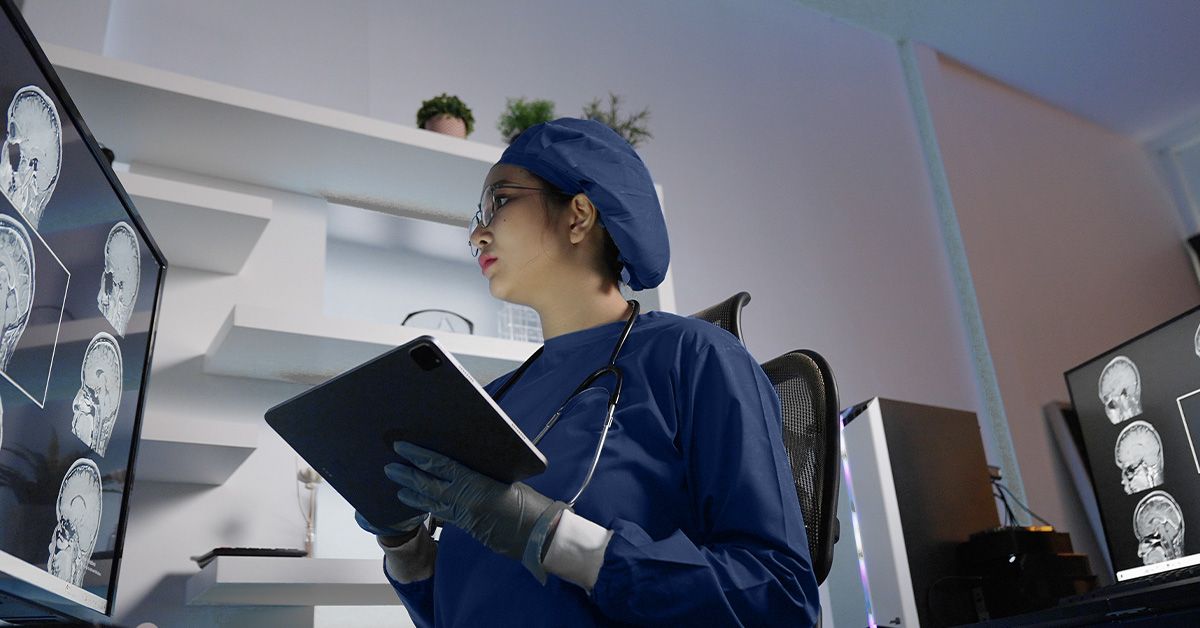
On a typical Wednesday afternoon at Mass General Brigham, a groundbreaking discovery is taking shape within the walls of their cutting-edge research facility. Researchers are poring over nearly 49,000 brain MRI scans to unlock a trove of information that could transform the landscape of neurology. At the helm of this endeavor is the newly developed Brain Imaging Adaptive Core (BrainIAC), an artificial intelligence tool poised to become a game-changer in the early detection of brain-related ailments.
The Importance of Brain Health
The brain, often regarded as the body’s command center, holds the key to our overall health and well-being. Early detection of conditions like dementia, brain aging, and brain cancer is crucial for not only extending life expectancy but also improving quality of life. As the healthcare industry grapples with the rising prevalence of these neurological disorders, effective diagnostic tools have become more important than ever.
- Early Detection: Identifying health issues before they escalate.
- Predictive Insights: Understanding individual risk factors.
- Customized Treatment: Tailoring therapies to specific needs.
Dr. Benjamin Kann, an associate professor of radiation oncology at Brigham and Women’s Hospital, notes the significant advantages of BrainIAC: “This AI foundation model is trained on vast datasets of brain MRI scans, which empowers it to understand the structures of the brain. From this core baseline, it can adapt to identify various brain diseases, their severity, and future risk predictions.” This foundational training allows BrainIAC to transcend traditional diagnostic methods, offering insights that may remain hidden when only human eyes interpret the scans.
Unlocking Hidden Data
Traditionally, brain MRIs have been analyzed for specific symptoms, yet this approach can overlook a wealth of valuable data. “Most scans tell only a fraction of the story,” Dr. Kann elaborates, highlighting the need for advanced analytical tools. “With AI, we can unveil deeper patterns and signals, from early signs of dementia to the subtle characteristics of brain tumors.” Through its rigorous training on varied MRI datasets, BrainIAC demonstrated its capability in multiple critical areas, including:
- Identifying brain age.
- Predicting dementia risk.
- Detecting variations in brain tumors.
- Estimating survival rates for brain cancer patients.
Clinical Applications and Implications
One of the more intriguing potential applications of BrainIAC lies in its ability to assist clinicians in implementing preventative strategies. For example, if the AI predicts a high risk of dementia for a patient, healthcare providers can initiate interventions, such as cognitive training and lifestyle modifications, to mitigate future risks. “This could ultimately enhance treatment quality and improve survival odds,” Dr. Kann emphasizes, illustrating the potential real-world benefits of this research.
A Paradigm Shift in AI Research
The development of BrainIAC not only enhances diagnostic capabilities but also addresses a longstanding issue in medical imaging: the scarcity of large, well-labeled datasets. Dr. Kann points out, “Our approach utilizes self-supervised learning across a substantial number of MRIs, allowing us to develop a robust model even when specific training data is limited.” This technique stands as a model for the future, especially in clinical environments where resources may be constrained.
Walavan Sivakumar, a board-certified neurosurgeon, notes, “The adaptability of BrainIAC across diverse datasets is noteworthy. This model’s ability to generalize across multiple tasks is a significant step towards practical applications in real-world settings.” He further emphasizes the crucial need for advanced analysis to capture subtleties that human clinicians might miss. “For disease states like dementia and brain cancer, where earlier risk stratification holds tremendous potential for improving treatment outcomes, this AI could be transformative,” he adds.
Cautious Optimism
While the excitement surrounding BrainIAC is palpable, experts like Lana Zhovtis Ryerson, director of the neuroimmunology division at Jersey Shore University Medical Center, advocate for grounded expectations. “It is crucial that we evaluate this AI model in real clinical practice. Only then can we determine its true efficacy and impact,” she asserts. Ryerson’s concerns center around the challenges of integrating new technologies into existing healthcare systems, a notion that remains a significant obstacle to widespread adoption.
With BrainIAC now available as an open-source tool for research purposes, the door is wide open for collaboration across institutions. “We hope to see various applications of this model in addressing diverse brain conditions, paving the way for future innovations in neurological care,” Dr. Kann states, alluding to the ongoing evolution of AI in medicine.
As researchers gaze into the future, the potential for BrainIAC to revolutionize our understanding of brain health cannot be overstated. With aging populations and a rising incidence of neurological disorders, tools like BrainIAC may not only save lives but transform them. The journey toward integrating AI into daily clinical practice is sure to be fraught with challenges, but the evidence suggests that it may well be worth the effort. The promise of early detection and customized treatment stands at the threshold of a new era, where technology and medicine converge for the betterment of humanity.
Source: www.medicalnewstoday.com

