


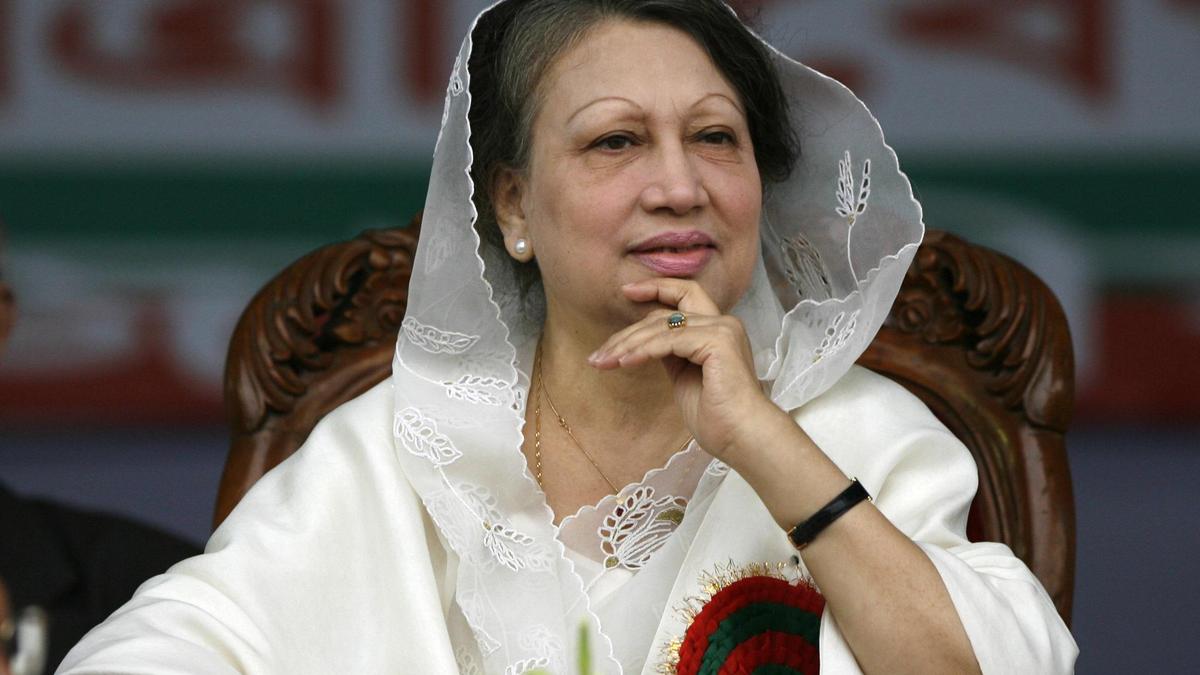
A Four-Member Specialist Medical Team from the U.K. Arrived in Bangladesh to Assist Khaleda Zia
As dawn broke over Dhaka on December 3, 2025, a palpable tension filled the air around Evercare Hospital. The arrival of a four-member medical team from the United Kingdom marked a pivotal moment in the ongoing saga of Khaleda Zia, the 80-year-old former Prime Minister of Bangladesh, who has been battling severe health issues. The gravity of her situation eclipsed the hustle and bustle of the city, as concerned citizens and political supporters alike awaited any news of her condition.
The Medical Mission
Led by Dr. Richard Buell, a renowned professor of intensive care medicine at King’s College London, the specialist team swiftly consulted with the local medical professionals attending to Zia. Dr. Buell, known for pioneering advanced treatment protocols, expressed cautious optimism upon receiving updates about Zia’s condition. “We are here to collaborate and support the local team in formulating an advanced treatment plan,” he stated, emphasizing the need for a tailored approach in complex cases like hers.
Reports indicate that Zia remains in critical condition, primarily due to infections affecting her heart and lungs. Despite her ongoing battle, she continues to respond to the medical treatment administered in the intensive care unit. Dr. A.Z.M. Zahid Hossain, her personal physician, noted, “She is maintaining the treatment, but the path ahead is fraught with challenges.”
Heightened Security Measures
While medical concerns took center stage, the political implications of her health were equally significant. In a move that amplified the gravity of the situation, the interim government deployed Army and Air Force helicopters to conduct test landings near the hospital—signifying Zia’s status as a “very, very important person.” This designation enables resources from the Special Security Force (SSF) to be dedicated to her protection, a necessity underscored by the volatility of Bangladesh’s political climate.
- Emergency protocols activated
- Joint visits from military leadership
- Collaboration with international medical teams
The military’s involvement drew attention not only to Zia’s deteriorating health but also to the political maneuverings surrounding her party, the Bangladesh Nationalist Party (BNP). In an unprecedented visit, the chiefs of the Army, Navy, and Air Force made their way to the hospital, offering prayers for her recovery and meeting with her family. This act of solidarity highlighted the intertwining of health, politics, and national security.
The International Dimension
The involvement of foreign medical experts was not just a display of goodwill; it underscored the pressing need for advanced medical intervention at this critical juncture. A Chinese team had already arrived earlier, further reflecting the global stakes involved in Zia’s health crisis. As Dr. Hossain commented, “We’ve received offers from several countries for medical assistance, highlighting how intertwined international relations are with our internal challenges.”
A study conducted by the Asia Health Coalition revealed that over 50% of critically ill patients in developing nations experience delayed intervention due to lack of access to advanced medical care. Zia’s situation has thus drawn scrutiny not just for its immediate implications but also for what it signifies about healthcare accessibility in a developing democracy.
Public Sentiment
As news spread about Zia’s health status, public sentiment grew increasingly fervent. Supporters of the BNP organized special prayer sessions across major cities, demonstrating grassroots support. “This isn’t just about one woman; it’s about the resilience of a democracy under threat,” remarked political scientist Dr. Farzana Ahmed. “The public outcry reflects broader concerns about political representation and accountability.”
Social media platforms became battlegrounds for expressions of hope and anxiety, with many citizens rallying behind hashtags advocating for Zia’s recovery. The collective sentiment was so strong that it transcended party lines, fostering a sense of unity among those who believe in the democratic process.
A Complex Political Landscape
Amidst the medical crisis lay a politically fraught atmosphere. The BNP has recently re-emerged as a frontrunner in Bangladesh’s political arena after a significant shift occurred following violent uprisings against the ruling Awami League government in 2024. The unexpected return of Zia’s son, Tarique Rahman, from exile has fueled speculations about the future leadership of the BNP.
With the Election Commission noting potential complications regarding Rahman’s citizenship status, the party’s trajectory remains clouded in uncertainty. “Tarique Rahman brings with him a renewed hope for many. However, navigating the intricate political landscape will require both finesse and resilience,” stated political analyst Maruf Ullah.
Selecting the path forward is daunting; however, the survival of Khaleda Zia could redefine the contours of Bangladeshi politics. “What we’re witnessing is a rare convergence of health, politics, and public sentiment,” Dr. Ahsan Kabir concluded. “It highlights the fragility of our institutions and how personal stories can reshape national narratives.”
As the sun sank into the horizon, the hopes of a nation converged upon a single hospital room in Dhaka. The next few days would be pivotal—not only for Khaleda Zia but for the very fabric of Bangladesh’s democratic ideals. In the intertwining stories of health, politics, and public support, the outcome remains uncertain, but the stakes have never been higher.
Source: www.thehindu.com

